The outcome of biochar application depends on the feedstock, production process, material quality, soil properties, dose and application method. A serious project therefore starts with soil analysis, a documented material batch and a controlled pilot, rather than a promise.
Key points
- Not every charcoal is biochar, and not every biochar is suitable for use in soil.
- There is potential, but effects differ between soils, plants and types of biochar.
- Quality, traceability, a control plot and measurement matter more than general climate promises.
What exactly do we call biochar?
In this dossier, biochar means a carbon-rich material produced by controlled thermochemical treatment of suitable biomass with limited oxygen. The properties of the final material vary with the feedstock and process conditions. That is precisely why colour or appearance is not proof of quality.
European rules for pyrolysis and gasification materials specify acceptable input materials, process conditions and limits for certain contaminants when such material is placed on the market as a component of an EU fertilising product. The intended use, legal status and laboratory documentation of the product must be checked separately for each specific application.
Potential without shortcuts
Review of 26 global meta-analyses records generally beneficial effects of biochar across a range of agronomic and environmental indicators, but also substantial variability in results. Another review warns that the mechanism and magnitude of the effect depend on the combination of material, soil, climate and management practices.
“Soil regeneration” is therefore not a marketing label. It must mean a measurable change in soil functions: for example, physical condition, water and relevant nutrient availability, biological activity or organic carbon stability. Unless the problem is defined in advance, it is impossible to determine fairly whether the application has helped.
Biomass type, traceability from source to batch, and the absence of unacceptable contaminants.
Documented process parameters and responsible by-product management.
Carbon, pH, conductivity, nutrients and relevant contaminants.
Initial soil analysis, a control plot, a recorded dose and a measurement schedule.
Why start with a pilot?
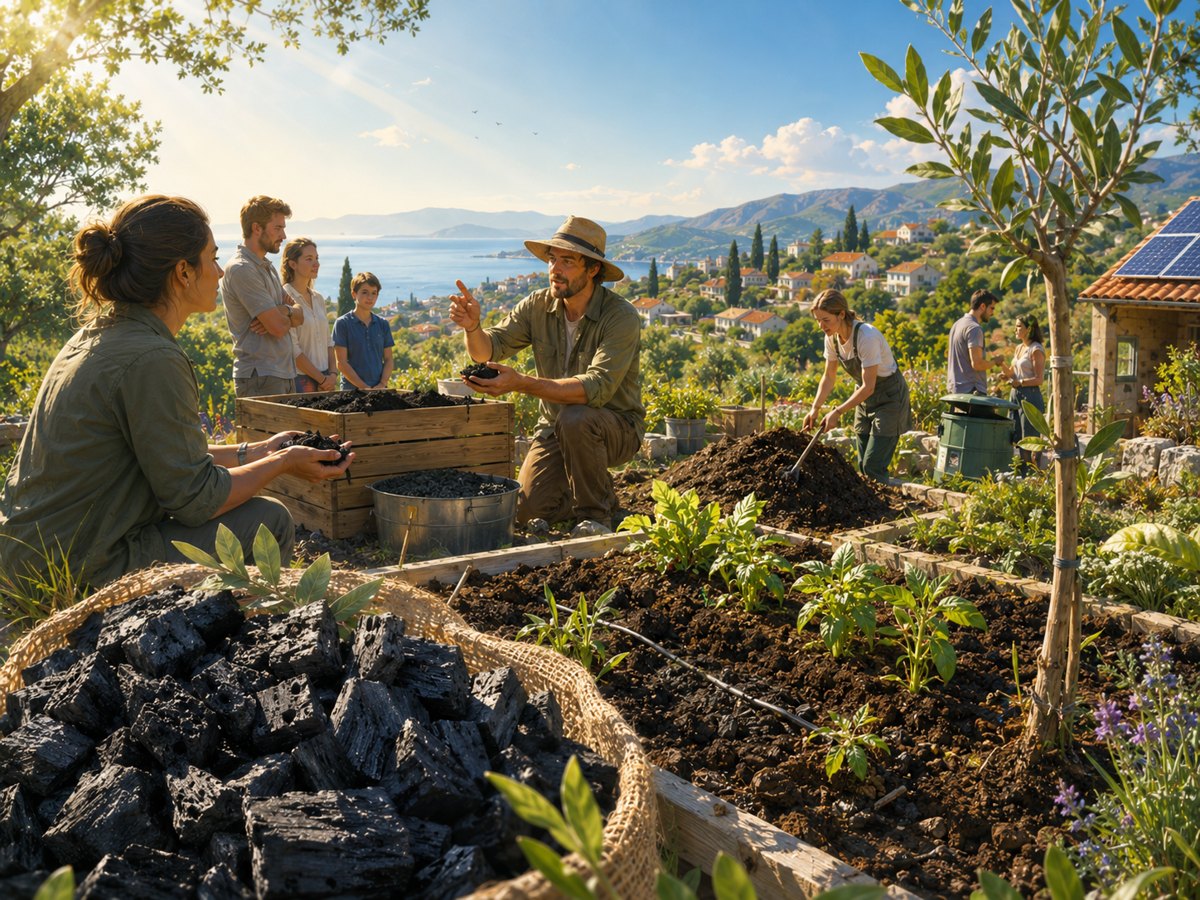
A small, well-documented pilot enables comparison with a control plot and reduces the risk of a costly intervention unsuited to local conditions. Before application, record the baseline conditions, batch properties, method of incorporation into the soil, expected mechanism of action and the threshold for deciding whether it makes sense to continue.
What to monitor
- soil pH, electrical conductivity and organic carbon;
- water retention, infiltration and the physical condition of soil;
- availability of nutrients relevant to the target vegetation;
- the growth and health of plants or trees;
- potential contaminants and the batch and origin of the material;
- the difference from a predefined control over several seasons.
What does Arbora bring to this topic?
As the initiator of this topic, Arbora connects biomass residue flows, urban soil conditions, practical implementation and long-term care of green spaces. According to documentation Arbora supplied to the editorial team, a pilot involving six trees began on 15 November 2025. Until the public protocol and results are published, we treat this information as the initiator's operational starting point, not as proof of general effectiveness. Results should be published alongside the baseline conditions, control, batch used and measurement limitations.
The topic was initiated by Arbora, which works in fields related to biochar, soil and tree care. Ekologija.hr independently selects sources, verifies claims and decides what to publish. Operational data from the initiator will be specifically labelled.
What can we responsibly say so far?
Biochar has significant potential in certain systems, but it must not become a shortcut to unverified claims about a “green” product. Good application begins with quality feedstock and production, continues with local soil analysis and ends with long-term measurement. Without that, we do not know whether we are restoring soil functions or simply adding another material.