
SCIENCE · MEDITERRANEAN RESEARCH
CIESM: more than a century of joint Mediterranean research
From the first oceanographic initiatives and the Cousteau era to Croatia's contribution and new marine observation systems
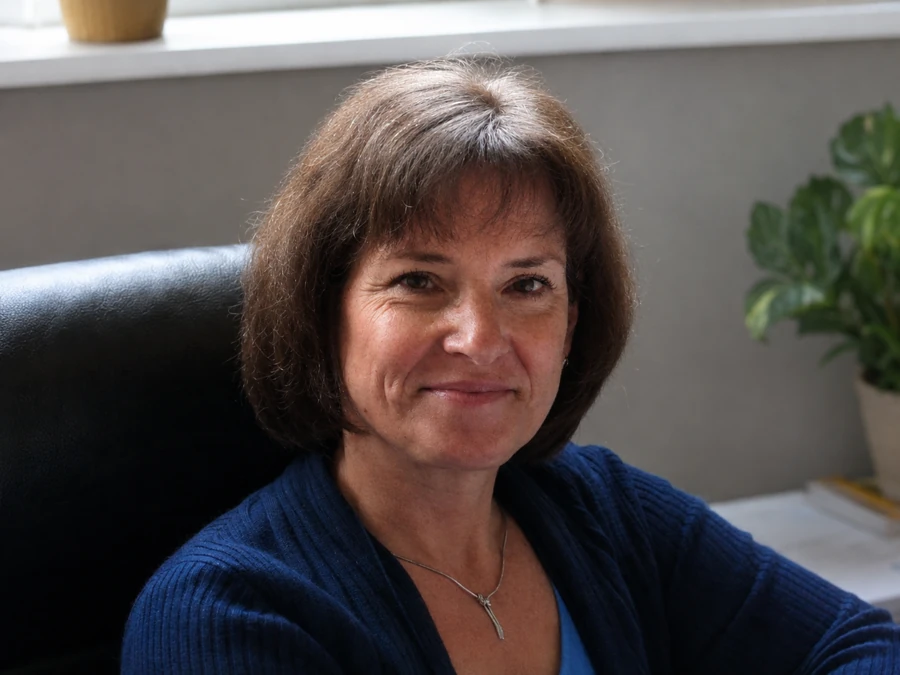
Introducing the author: Marina Mlakar, PhD
Marina Mlakar, PhD, is a chemist and long-standing scientist at the Ruđer Bošković Institute, now an external associate of its Division for Marine and Environmental Research. She studies marine and environmental chemistry, particularly trace metals and their interactions with organic matter in natural waters. She has been involved with CIESM since 1983. From 2019 to 2024, she chaired its Marine Biogeochemistry Committee and served on its Scientific Board. Today she continues this work as a member of the CIESM General Assembly, representing the Republic of Croatia following her appointment by the Ministry of Science. In her first contribution to Ekologija.hr, she explains the Commission's origins, its work and the contribution of Croatian scientists to understanding the Mediterranean and the Adriatic. [5–7]
How much has the sea changed over a human lifetime? The answer cannot come from a single water sample or one research voyage. Comparable measurements over years and decades are needed: temperature and salinity, seawater chemistry, marine organisms and the conditions in which they live. It is equally important to know when, where and how the data were collected.
The Adriatic is part of the Mediterranean. To understand changes along our own coast, we must connect them to processes taking place across a much wider area. Such cooperation is the foundation of CIESM — the International Commission for the Scientific Exploration of the Mediterranean, an organisation that has brought together scientists, institutions and countries interested in studying and preserving the sea for more than a century. [1]
From the initial idea to an international commission
The story begins in 1908, when the Italian scientist Decio Vinciguerra proposed systematic oceanographic research of the Mediterranean at the International Geographical Congress in Geneva. The initial impetus was the need to understand fish resources and the conditions affecting them better. Alongside Vinciguerra, Prince Albert I of Monaco, a major supporter of marine research, played an important role.
Under his patronage, a preparatory meeting for the future commission took place on 30 March 1910 at the newly opened Oceanographic Museum in Monaco. Systematic hydrological and biological measurements and international cooperation were discussed. Political circumstances and the First World War delayed its establishment, so CIESM was formally founded at its constituent assembly in Madrid in November 1919. Albert I became the Commission's first president. [1]
CIESM's later development was also shaped by figures familiar to the wider public. French oceanographer and explorer Jacques-Yves Cousteau was elected Secretary General in 1966 and held the position until 1988. During his 22-year tenure, the Commission's scientific activity expanded and the number of scientific committees rose to ten. François Doumenge succeeded Cousteau as Secretary General. [1]
An important organisational milestone came in 1991 with the creation of the director-general position. Marine scientist Frédéric Briand was appointed to the role and spent more than three decades helping expand international cooperation, research programmes and publishing activities, including the CIESM Workshop Monographs series. In September 2023, he was succeeded by Laura Giuliano, the Commission's current director-general, whose mandate emphasises open science, data accessibility and connections between research communities. The director-general position should not be confused with the former secretary-general position. [1]
In September 2001, at the 36th CIESM Plenary Assembly in Monaco, the member states unanimously elected the then Hereditary Prince of Monaco, Albert, as President of the Commission. He succeeded his father, Prince Rainier III, in the post. Prince Albert II led the Commission for several consecutive terms. In 2019, he was re-elected for a six-year term, and today he is Honorary President of CIESM. [2], [13], [14] In Monaco’s Official Journal, Albert’s father is listed under his full name, Rainier Louis Henri Maxence Bertrand Grimaldi. [15]
How CIESM connects scientists
CIESM today brings together 23 member states, including Croatia, and scientists and institutions studying the Mediterranean and Black Seas. Six scientific committees connect research in marine geology, ocean physics and climate, biogeochemistry, microbiology and biotechnology, living resources and ecosystems, and coastal systems and marine management. [2]
The Commission organises scientific congresses, expert workshops and research programmes, and publishes monographs and recommendations. The General Assembly, composed of representatives of member countries, is the formal decision-making body, while the Scientific Board brings together the chairs of the scientific committees. These different forms of participation connect scientific priorities with international cooperation. [2]
Workshops where a small group of experts examine a clearly defined question, compare results and seek agreement on shared methods are particularly important. Such a meeting can mark the beginning of a research programme lasting for years. This is the foundation of several initiatives important for monitoring change in the Mediterranean.
Why long-term measurements matter
One example is the Hydrochanges programme, supported by CIESM since 2002. Temperature and salinity are continuously monitored at selected Mediterranean locations, particularly in deep basins and important marine passages. A single measurement describes conditions at a particular moment; a data series collected over years helps distinguish short-term fluctuations from long-term changes. [8]
Other CIESM programmes address, among other things, jellyfish occurrences, non-native species and changes in marine ecosystems. They share the question of how to ensure comparable observations in different parts of the sea. If two research groups obtain different results, it is important to know whether this reflects a real environmental change or a difference in measurement methods. Reliable scientific interpretation begins with that check. [8]
Croatia as a place to agree on research
Croatia has been a CIESM member since 1992, but participation by scientists from the territory of present-day Croatia goes much further back. Professor Marko Branica, PhD (1931–2004), one of the founders of the scientific tradition of today's Division for Marine and Environmental Research at the Ruđer Bošković Institute, holds a special place in this relationship. In the author's recollection and assessment, Branica was the key link between the Institute and CIESM, and one of those most responsible for independent Croatia joining the Commission.
Branica studied marine chemistry and trace metals and chaired CIESM's Chemical Oceanography Committee for several terms between 1970 and 1995. After Croatia joined in 1992, he became its national representative on the Commission, a role he held until his death in 2004. He also led the organisation of the 35th CIESM Congress, held in the Dubrovnik area in 1998. His work opened up opportunities for international cooperation for generations of Croatian scientists. [4]
Two CIESM congresses took place in what is now Croatia: the 25th congress in Split in 1976 and the 35th in the Dubrovnik area in 1998. CIESM lists the latter as Dubrovnik in its official archive, while scientific meetings in Cavtat during the congress are also documented. That gathering completed a major reorganisation, merging eleven scientific committees into six. [1, 3, 12]
The 43rd CIESM workshop, held in Supetar on Brač from 11 to 14 May 2011, left a particular mark. Discussions focused on the Med-SHIP programme: repeated oceanographic surveys that would enable systematic monitoring of physical and biogeochemical changes in the Mediterranean. Instead of relying solely on individual research cruises, the aim was to coordinate observations, methods and data sharing. [9]
These examples show that Croatia is more than a participant in international marine research. Its scientists and cities have been settings in which programmes and agreements important to the entire Mediterranean scientific community were shaped.
When decades of data become comparable: CARIMED
One recent example of the value of such international cooperation is CARIMED, whose full name is CARbon, tracers, and ancillary data In the MEDiterranean Sea. It is an internationally developed, publicly available and scientifically validated collection of oceanographic data on the Mediterranean. CARIMED is not exclusively a CIESM project: it was developed by researchers from several institutions, with an important contribution from teams at the Spanish Institute of Oceanography and other European and American institutions. [10]
Why is such a collection needed? Over the decades, scientists measured seawater properties aboard research vessels, but the data often remained in different archives and were processed using different methods. CARIMED brings together measurements from 46 research cruises conducted from 1976 to 2018, including temperature and salinity, dissolved oxygen, nutrients, carbon system parameters and chemical tracers of water-mass movement. [10]
Its particular value lies in quality control and the harmonisation of measurements. This reduces systematic differences between datasets and creates a more reliable basis for monitoring ocean acidification, carbon cycling, changes in oxygen concentrations and the long-term effects of climate change. The results were presented in a paper by Marta Álvarez, Maribel I. García-Ibáñez, Nico Lange and colleagues, published on 15 July 2026 in Earth System Science Data. [10]
The authors of that paper explicitly identify earlier CIESM workshops as important drivers of CARIMED, including the 2011 workshop in Supetar devoted to the Med-SHIP programme. The connection is clear: scientific agreements and shared needs identified at workshops can, through years of work by many institutions, result in a lasting research tool. [9, 10]
Zagreb workshop: what will we measure in the future?
The 56th CIESM workshop is planned in Zagreb for 9–12 November 2026, under the title Designing the next-generation Mediterranean Ocean Observing System: defining what to measure, how, and what comes next. According to the programme note supplied to the editorial team, 15 to 20 experts are expected to participate, with Katrin Schroeder and Vlado Cuculić, chairs of two CIESM scientific committees, serving as co-chairs. [11]
The workshop is conceived as a working meeting to develop joint recommendations, rather than a conventional conference. Participants are expected to address several connected questions: what is most important to measure, how to align methods, which new types of measurement are ready for routine use, how to develop integrated datasets such as CARIMED, and how to connect observations more effectively with modelling and forecasting. [11]
Indicators insufficiently included in today's monitoring systems are also being considered: greenhouse gases, pollutants, elements important for modern technologies, marine litter and microplastics. Particular attention is being given to data sharing, quality control and better inclusion of scientists from the southern and eastern Mediterranean. [11]
The discussions are intended to form the basis for practical recommendations and guidance for future marine observation. Their final conclusions, however, can only be discussed after the workshop has taken place. [11]
Why this cooperation matters to the Adriatic
Scientific data collected along the Croatian coast have greater value when they can be compared with observations from other parts of the Mediterranean. This makes it easier to distinguish local phenomena from processes affecting the entire sea basin and to better understand what is happening to water masses, marine organisms and the sea's chemical composition.
Reliable, long-term and comparable data are important for assessing ecological pressures, planning marine protection and checking the effectiveness of measures taken. They are equally important for the public: they enable a clearer distinction between measured facts, scientific estimates and questions for which we do not yet have definitive answers.
From the idea conceived in 1908 to today's open databases, CIESM has addressed the same need: to study the sea together, using methods that allow results to be compared. In a world of rapid change, such cooperation is essential if we are to recognise changes in the Mediterranean and Adriatic in time and respond responsibly.
Author’s correction of 5 November 2026. At the author’s suggestion, information about Prince Albert II’s presidential terms was added.
Sources and further reading
Numbers in square brackets in the text refer to the following sources.
- CIESM – History
- CIESM – Governance / General Assembly
- CIESM – Congresses (archive)
- Ruđer Bošković Institute — Marko Branica (1931–2004)
- Ruđer Bošković Institute — Marina Mlakar: election as committee chair, 2019.
- Ruđer Bošković Institute — Vlado Cuculić: election as committee chair, 2024.
- Ruđer Bošković Institute — Marina Mlakar's scientific profile
- CIESM – Hydrochanges
- CIESM Workshop Monographs 43 – Designing Med-SHIP, Supetar (2011)
- Álvarez et al. (2026), CARIMED, Earth System Science Data, 18, 4915–4941
- CIESM Workshop 56 – Concept Note, Zagreb, 9–12 November 2026
Internal document supplied to the editorial team by the author; not a public link.
- L’Orient-Le Jour (9 June 1998) — report on the congress in Cavtat
- CIESM – Governing Board and election of the President 2019 (archive)
- CIESM – 36th Congress in Monaco, September 2001
- Journal de Monaco – centenary of the birth of Prince Rainier III.