
REPUBLISHED ANNOUNCEMENT · WWF ADRIA
Living Planet Report 2026 presented in Zagreb: Croatia has an opportunity to become part of a positive tipping point for nature
Publication on Ekologija.hr:
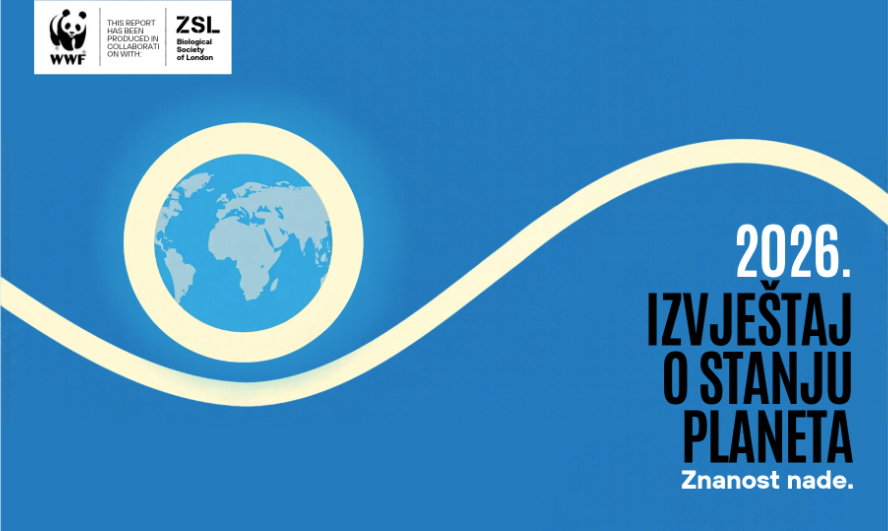
Global populations of wild vertebrates have declined by as much as 73% since 1970, according to the Living Planet Report 2026, WWF's flagship report on the state of nature. Yet despite the severity of the crisis, this year's report also carries a message of hope: when society makes the right decisions and persists in implementing them, it is possible to trigger positive tipping points that change the direction of development and enable nature to recover.
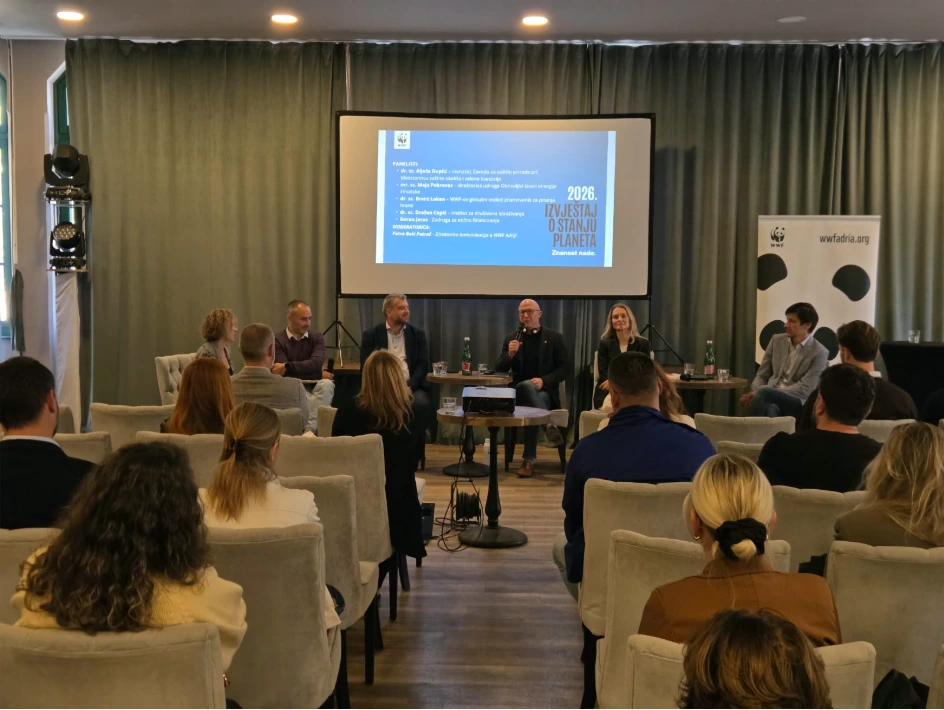
To mark the report's global launch, WWF-Adria organised a presentation of the findings. After WWF-Adria's acting executive director, Loris Palentini, presented the new data, a panel discussion followed. Leading experts in nature conservation, energy, food, finance and social sciences discussed what the report's data mean for Croatia and how to accelerate the changes needed to halt nature loss.
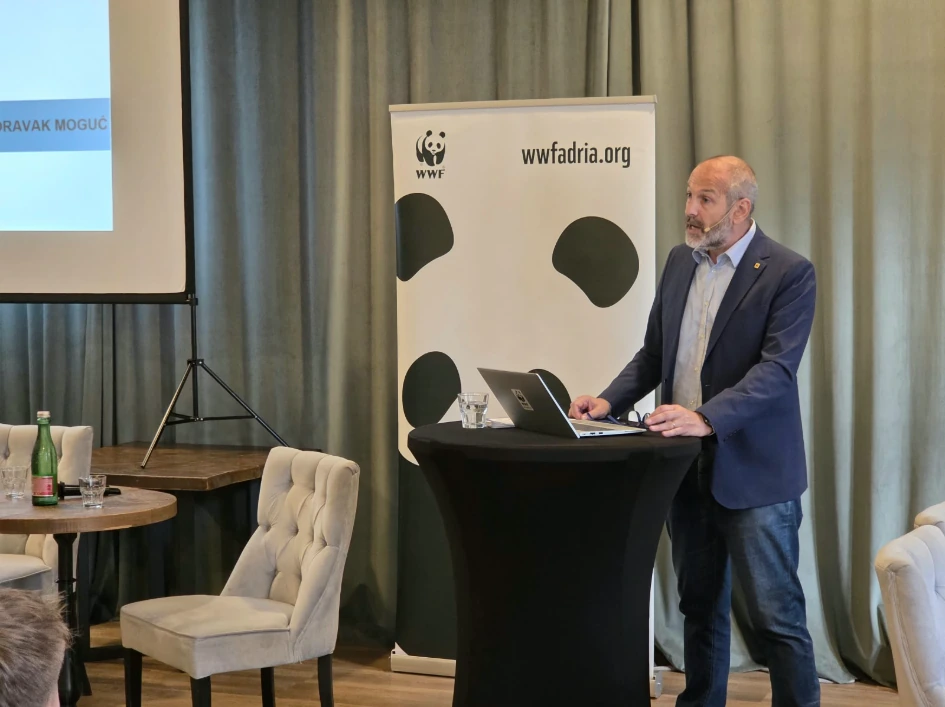
The panel featured Aljoša Duplić, PhD, director of the Institute for Nature Conservation at the Ministry of Environmental Protection and Green Transition; Maja Pokrovac, MSc, director of Renewable Energy Sources of Croatia; Brent Loken, PhD, WWF's global lead food scientist; Goran Jeras, manager of the Cooperative for Ethical Financing; and Dražen Cepić, PhD, from the Institute for Social Research.
The discussion opened with a question that shaped the entire event: what do these global trends tell us about the future, and where should we look for answers?
Participants agreed that nature loss is not an isolated environmental problem. How we produce energy, grow food, invest capital and make political decisions directly affects the state of nature and people's quality of life.
That is why the Living Planet Report 2026 identifies the energy system, food system and financial system as key areas for transformation. The report shows that positive tipping points are possible in these sectors and can accelerate change globally.
Speaking about the state of nature in Croatia, participants highlighted the importance of implementing the National Nature Restoration Plan and investing in concrete ecosystem restoration projects. Aljoša Duplić, PhD, stressed that, despite the large share of formally protected areas, marine and freshwater ecosystems remain under severe pressure, and nature protection must produce tangible changes on the ground. Projects restoring natural river systems were cited as examples that can bring long-term benefits to both nature and local communities.
The panellists stressed that the energy transition and nature protection must not be opposing goals. Maja Pokrovac warned that Croatia still imports a significant share of its energy and that renewable energy development must be faster and more effective. Models enabling simultaneous production of energy and food, as well as more active public involvement in the energy transition, were highlighted as possible solutions.
Much of the discussion focused on the food system, one of the biggest drivers of nature loss but also one of the greatest areas for potential change. Brent Loken, PhD, who is also one of the report's authors, spoke about the need to transform food systems through healthier and more sustainable diets, reduced food waste and stronger cooperation between businesses, institutions and citizens. The Living Planet Report warns that almost a third of the food produced worldwide is wasted, placing additional pressure on natural resources and the climate.
Goran Jeras raised the question of the financial system and how we direct capital today. He emphasised the importance of ethical financing and strengthening local economic models that enable communities to create and retain more value locally. Participants also discussed the need to direct financial flows towards activities that help restore nature rather than degrade it.
Sociologist Dražen Cepić, PhD, pointed out that social changes most often happen when people recognise a problem's direct impact on their own lives. That is precisely why nature protection cannot remain a concern only for experts and environmental organisations; it must become a shared social project.
Participants stressed the importance of education, involving local communities and creating opportunities for cooperation among institutions, businesses and citizens.
Although data on the state of the planet highlight the seriousness of the situation, this year's report also presents examples of successful species and ecosystem recovery. The recovery of bluefin tuna, which was on the brink of extinction around fifteen years ago, shows that timely decisions and long-term cooperation can deliver results. Other success stories include tigers, green turtles and African elephants.
The panel's conclusion was clear: the future is not predetermined. Croatia and the world already have the knowledge, technology and examples of good practice needed for a turnaround. The question is no longer whether change is possible, but how quickly we will decide to implement it.
WWF Adria
The original title and full text are reproduced from the supplied WWF Adria statement of 9 October 2026. Layout and technical preparation: Ekologija.hr.
Source of photographs and cover visual: WWF Adria. The photographer's name is not stated in the supplied material.
Open the original WWF announcement ↗