
Citizen energy · local value and governance
ZEZ Sunce completes the citizen-owned power plant's first year and returns part of the profit to the community
The solar power plant on the roof of the City Market in Križevci generated 171.095 kWh in the first nine months of 2025, and cooperative members decided to direct part of the profit to the Community Fund.
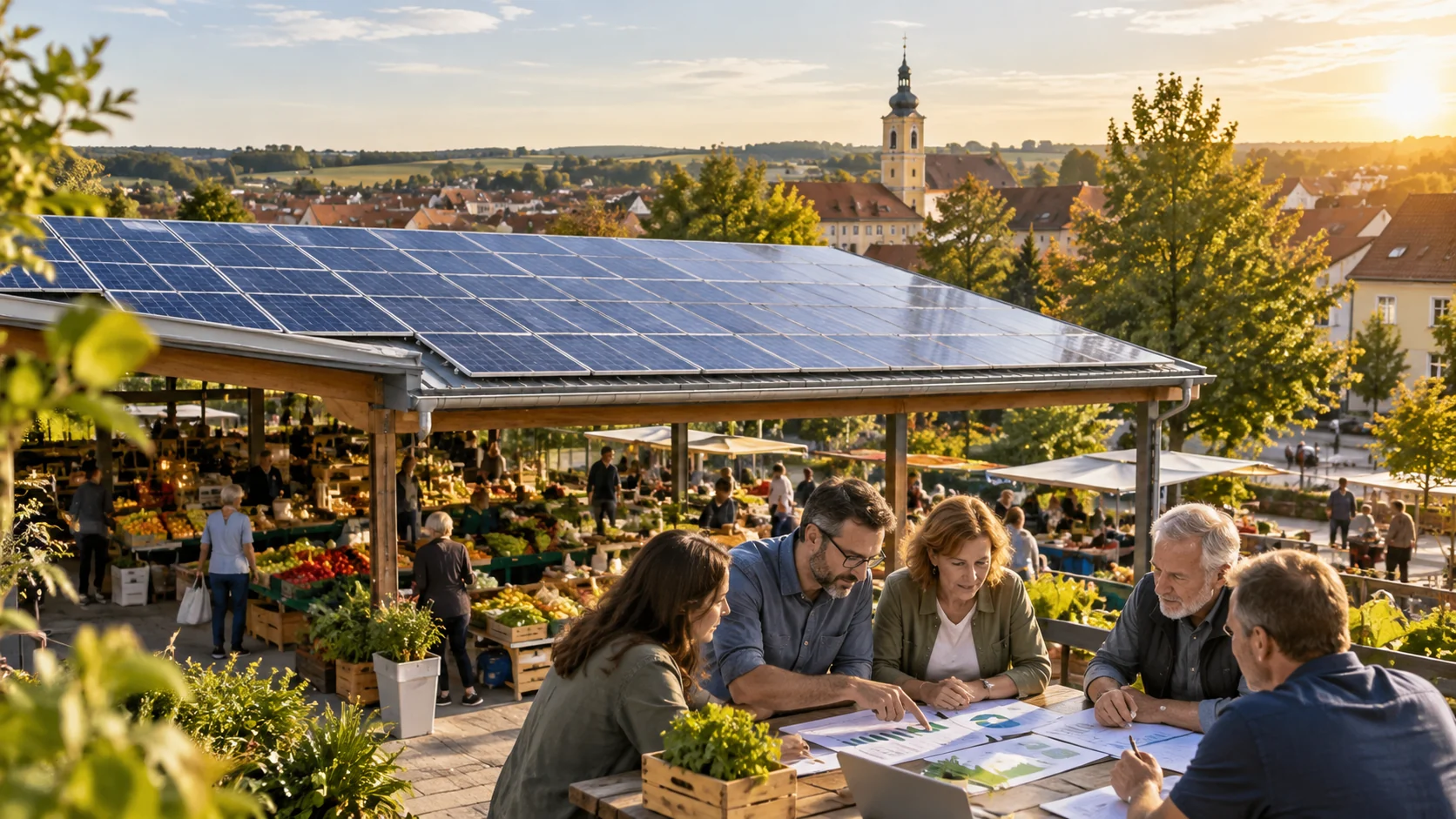
The European cooperative ZEZ Sunce has published the results of the first business year of the community-owned solar power plant on the roof of the City Market in Križevci. The plant has been in permanent operation since April 2025 and generated 171,095 kWh of electricity during the first nine months of that year, earning its first revenue and profits.
Key points
- The power plant generated approximately 171 MWh of electricity in the first nine months of 2025.
- ZEZ reports generated energy worth €11,973 and an estimated 34 tonnes of avoided CO₂ emissions.
- Members directed part of the profit to the “Volim Križevce” Foundation, alongside distributions and an allocation to the Community Fund.
Why the model matters more than the power plant itself
Solar panels are not this project's only distinctive feature. Through the cooperative, citizens jointly financed the power plant, monitor income and expenditure, and decide how profits are distributed. This makes them active participants in the energy system rather than merely end consumers of electricity.
ZEZ describes the project as the first implemented citizen energy model in Croatia and its immediate neighbourhood. For such projects to expand, rules on grid connection, billing and energy sharing must be sufficiently clear, and local authorities must be willing to open their roofs and data to the community.
Local value as a measure of success
The official report estimates that the energy generated is comparable to the annual consumption of around 50 households. The social impact is also visible in how some of the value is returned to the local community.
To compare future projects, it is useful to publicly track generation, financial performance, membership, the cost of capital, avoided emissions and the amount invested in shared needs. Transparency allows citizen energy to become a repeatable, credible model rather than remaining merely a symbolic story.
Related articles

Croatia continues to strengthen the green transition and climate resilience
The green transition only becomes meaningful when goals turn into measurable programmes, clear deadlines and accessible information on implementation.
August 2026 equals the global temperature record
August's global average air temperature was 16.96°C, tying with July 2023 as the hottest month on record, according to Copernicus data reported by Reuters.

Croatian expert warns: If we lose urban trees, Croatian cities will become concrete ovens
Fran Poštenjak, Croatia's first tree doctor, warns: Without a change in our attitude towards urban greenery, Croatian cities are losing their natural defence against extreme heat. “This is not an occasional anomaly, but a new reality”: Why are summer heatwaves silently killing trees in Croatian cities? Expert Fran Poštenjak explains, stressing that investing in trees is actually an investment in Croatia's climate resilience.