Workshop report · Varaždin
Waste without myths: knowledge for citizens, the media and decision-makers
The Faculty of Geotechnical Engineering is organising three separate workshops: for citizens, the media and decision-makers. We report on the media workshop held in Varaždin on 27 October.
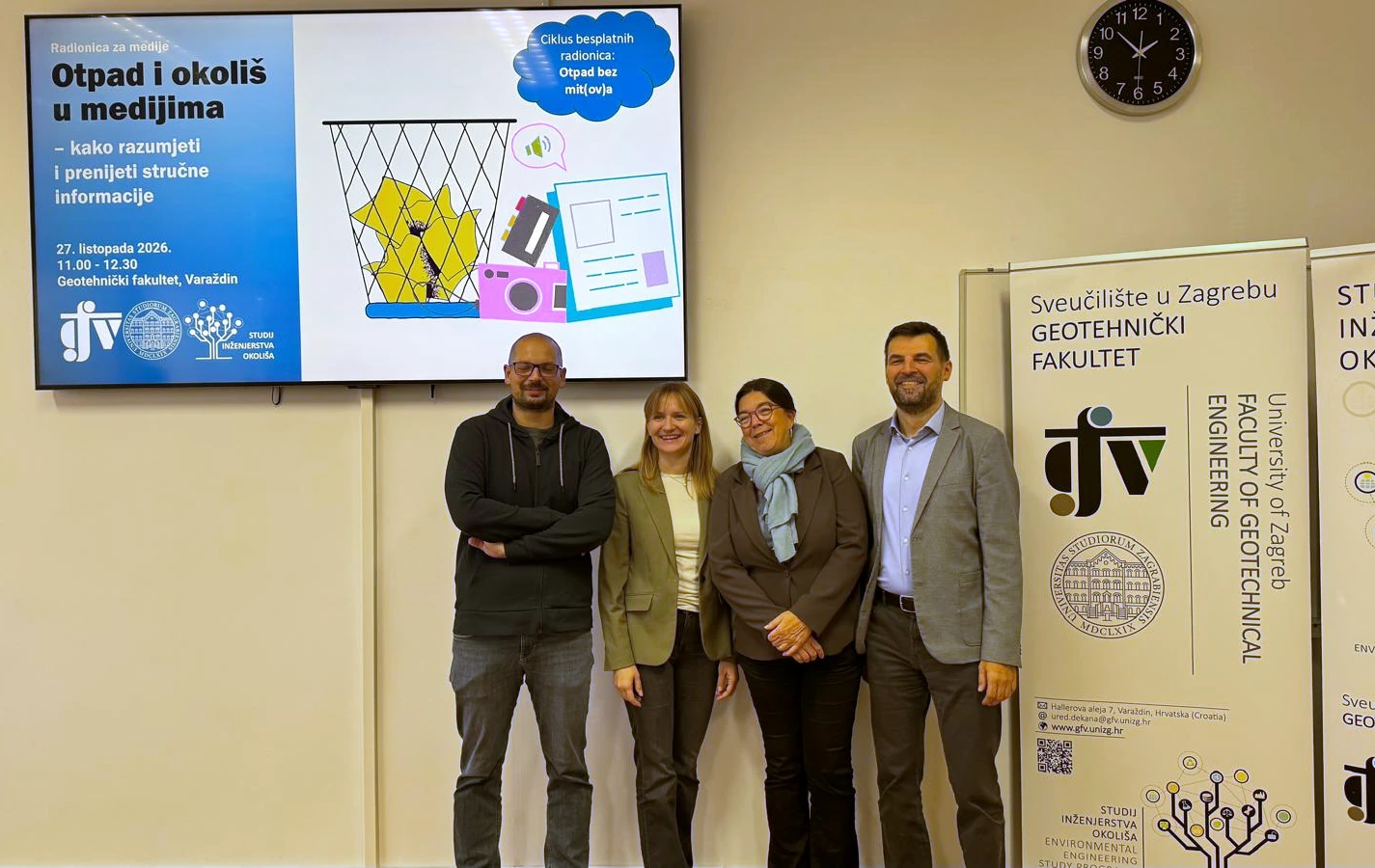
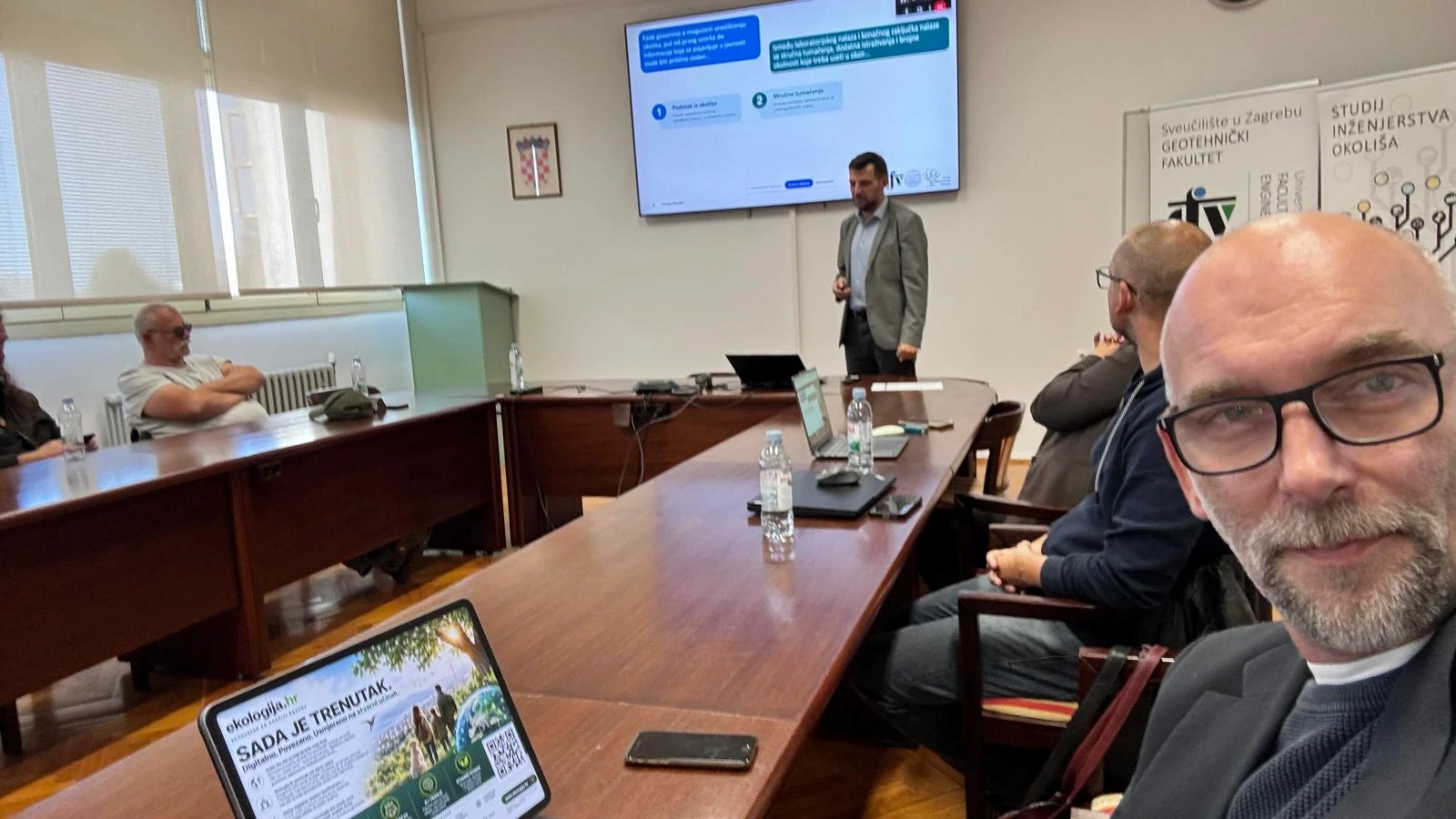
What do we actually know when we receive a laboratory report? What can we communicate to the public from it, and which conclusions require further research? These questions were at the heart of the workshop “Waste and the Environment in the Media — How to Understand and Communicate Technical Information”, held on 27 October at the University of Zagreb's Faculty of Geotechnical Engineering in Varaždin. It was the second of three separate workshops in the Faculty's series, this time aimed at media representatives. I attended on behalf of Ekologija.hr.
Through the presentations Assistant Professor Ivana Presečki, PhD, Mario Ančić, PhD, Professor Hrvoje Meaški, PhD, and Professor Aleksandra Anić Vučinić, PhD the same important question kept arising: how to turn technical data into understandable information while clearly stating what the data confirm and what remains unknown.
Three separate workshops for three different audiences
Under the shared title “Waste without myths” The Faculty of Geotechnical Engineering is organising three separate free workshops. Each has its own date, target group and programme tailored to that group's questions and responsibilities.
First workshop, for citizens, was held on 20 October. Second workshop, for the media, was held on 27 October. Third workshop, for decision-makers, is announced for 3 November from 11:00 to 12:30. This report covers the media workshop; all four presentations described below were part of that session.
This arrangement brings together three groups that discuss waste from different perspectives. Citizens want to understand what is happening in their surroundings. The media need to know which questions to ask and how to communicate the answers. Decision-makers need an expert basis for action. The series brings them together around a shared question: how to better understand the environmental impact of waste.
Ivana Presečki: from a tip-off to a story
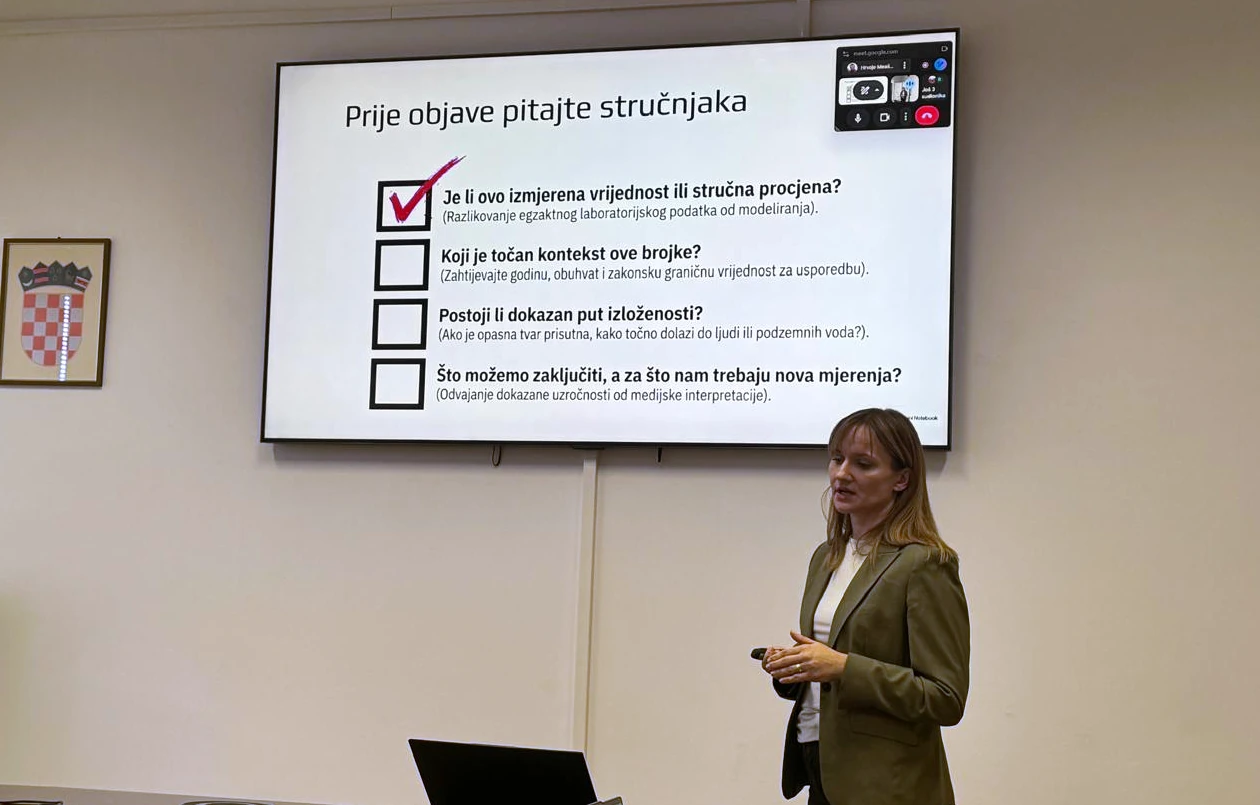
Assistant Professor, PhD Ivana Presečki focused attention on the journey from the first piece of information to a news article. Examples on the slides showed how much context changes the meaning of a figure: the annual amount of municipal waste generated per person is not the same as the amount separately collected or recycled.
Similar caution is needed when writing headlines. The presence of certain substances in a waste sample does not by itself confirm drinking-water contamination. Such a conclusion requires knowing what was analysed, where and when the sample was taken, and whether a confirmed exposure pathway exists.
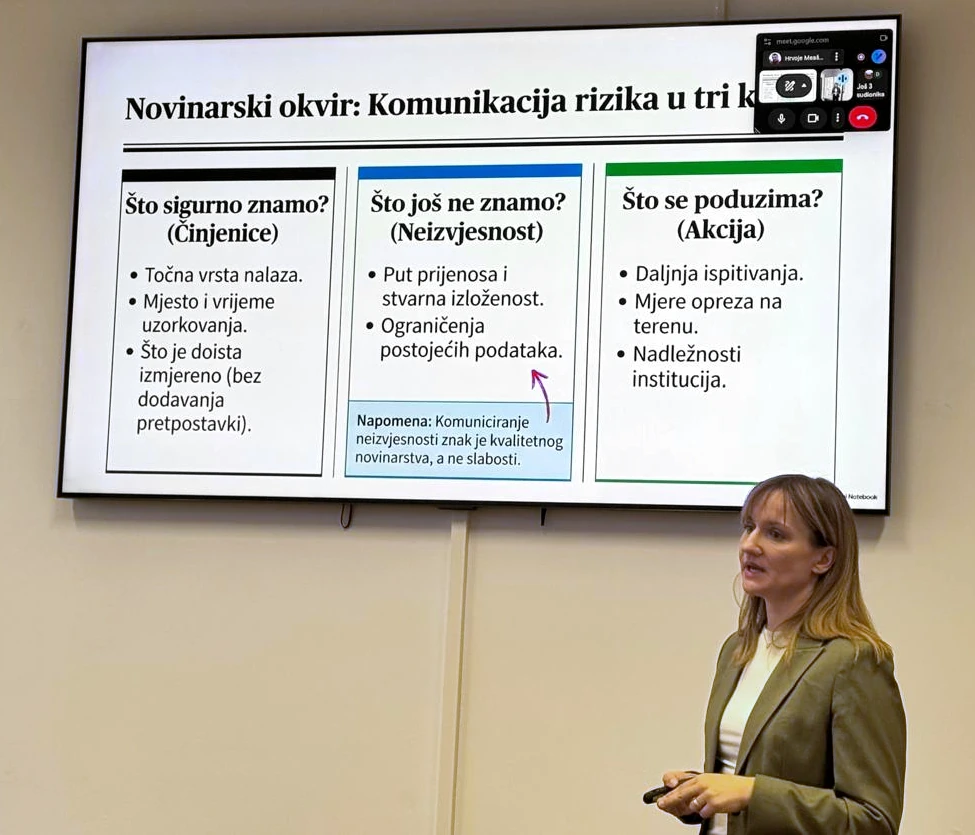
Three questions provide a useful reporting framework: what do we know reliably, what remains unknown, and what is being done? The reader thus receives both the finding and its limitations, along with information on further testing or measures.
Mario Ančić: the same sample, two different questions
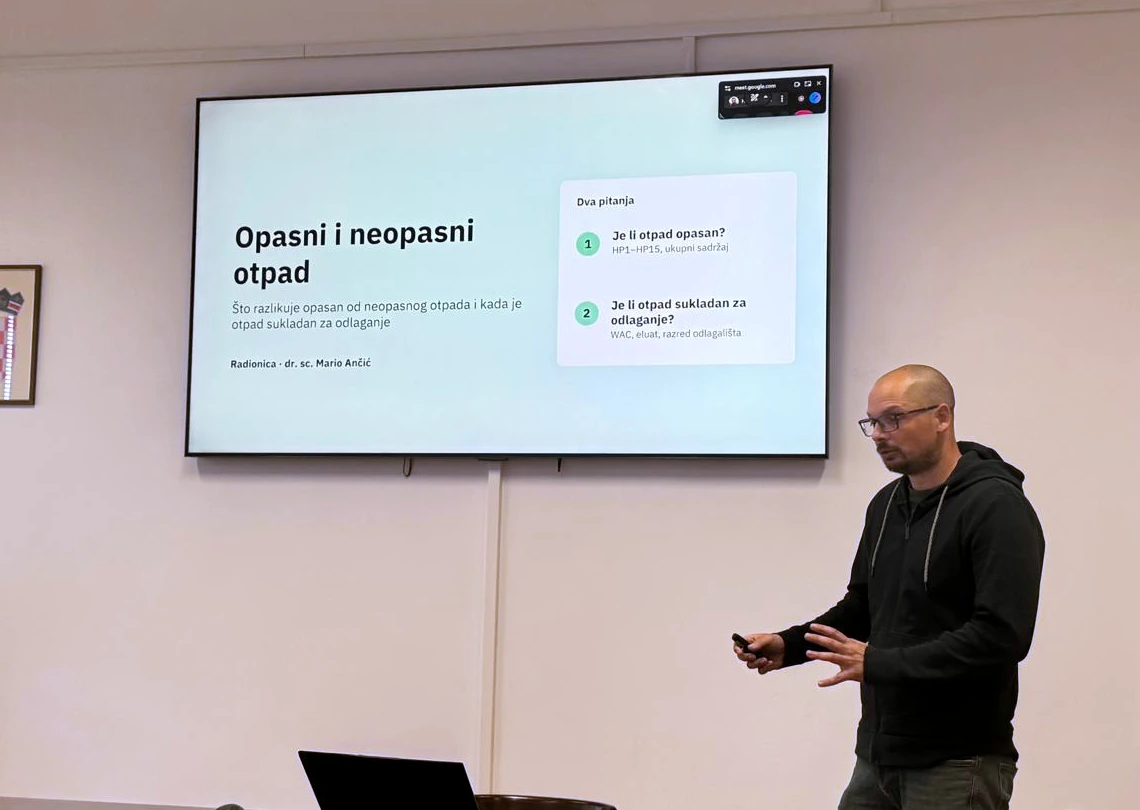
PhD Mario Ančić distinguished between two questions that can be confused in public debate: whether the waste is hazardous and whether it meets the acceptance criteria for a particular landfill.
In the framework presented, assessing waste's hazardous properties differs from checking the conditions for its disposal. The difference between the total content of a particular substance in waste and its leaching — its transfer into a liquid during testing — was also explained. Findings should therefore be read in relation to the question that each particular test addresses.
For journalists, this means seeking an explanation of the criteria used to interpret a figure, alongside the figure itself. Different testing procedures and assessment purposes cannot be reduced to the same conclusion.
Hrvoje Meaški: a single finding does not reveal the entire pollution pathway
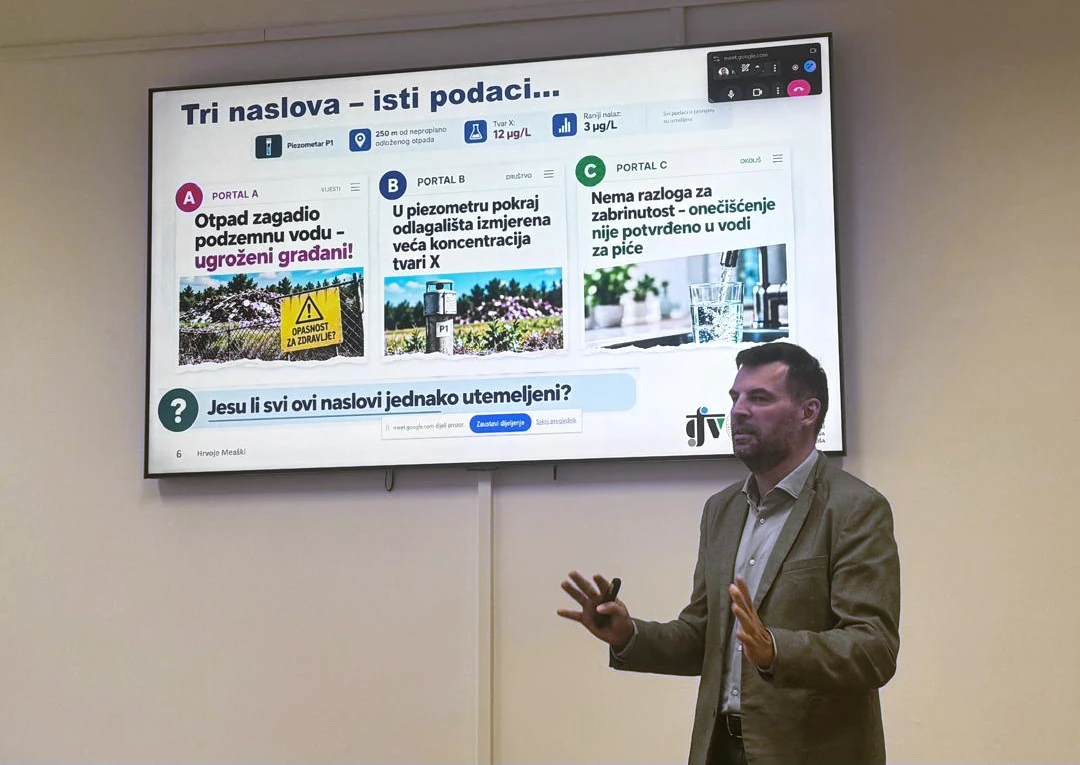
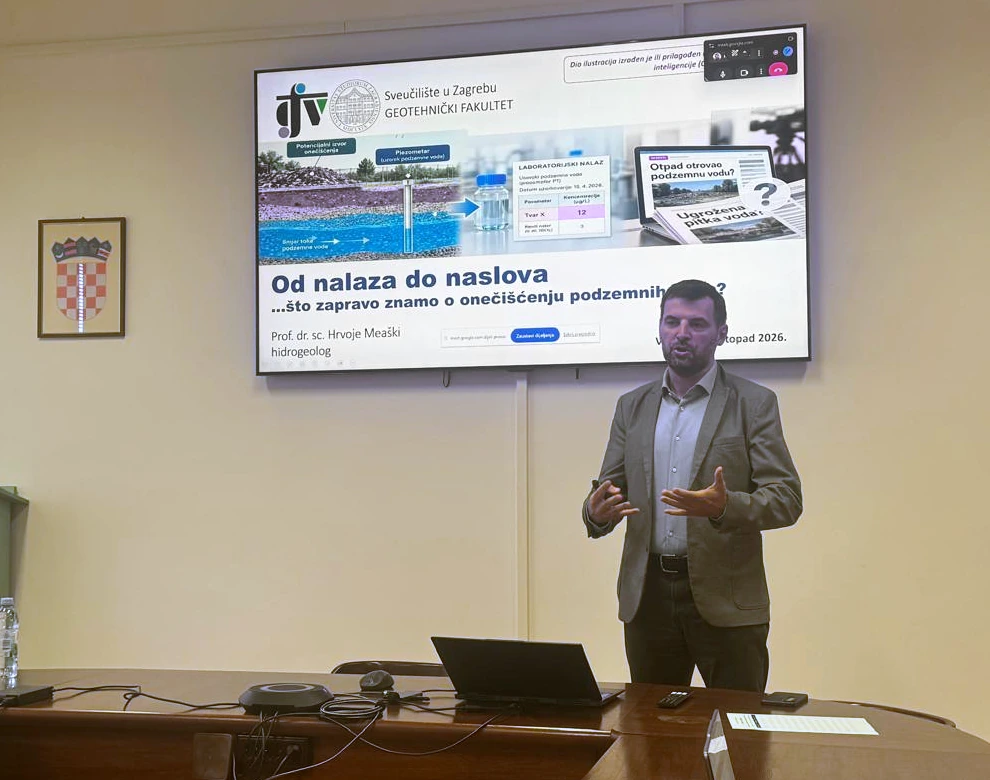
Professor, PhD Hrvoje Meaški showed how many steps are needed between a groundwater finding and a conclusion about a possible source of pollution. In the educational example, the same measured value served as the basis for three different media headlines: alarming, descriptive and reassuring.
The example raised the question of whether each of those headlines was justified. A single finding provides information about a sample at a particular place and time. By itself, it does not establish where the substance came from, how widely it is distributed, how long it has been present or whether anyone is exposed. Nor does the proximity of deposited waste to the sampling site alone prove a causal connection.
This is precisely why an observed change must be distinguished from an explanation of its cause. An elevated finding warrants appropriate interpretation and further investigation; the scope of the conclusion must match the scope of the available evidence.
Aleksandra Anić Vučinić: the same waste, different conditions
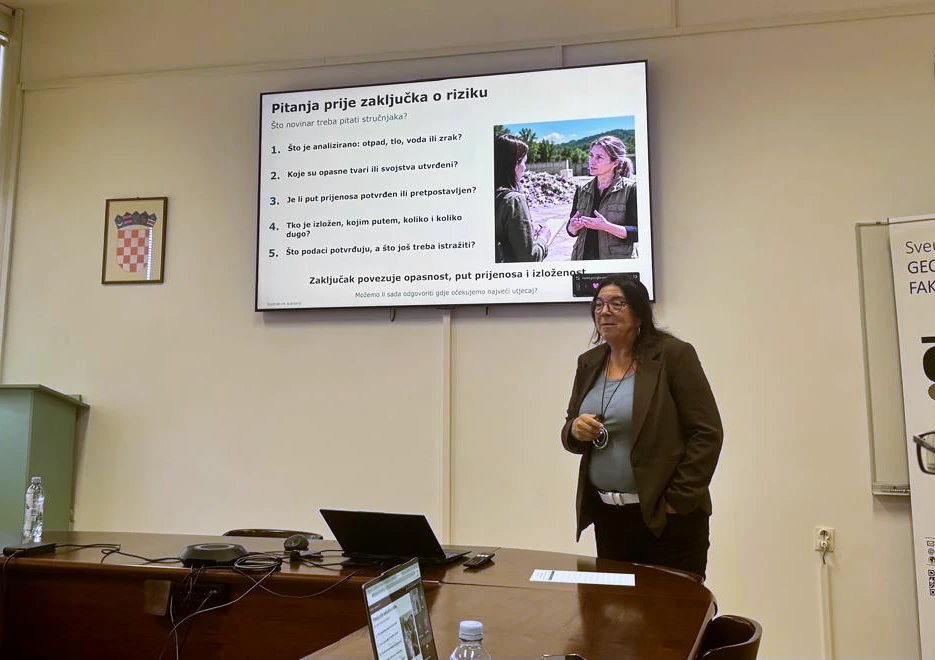
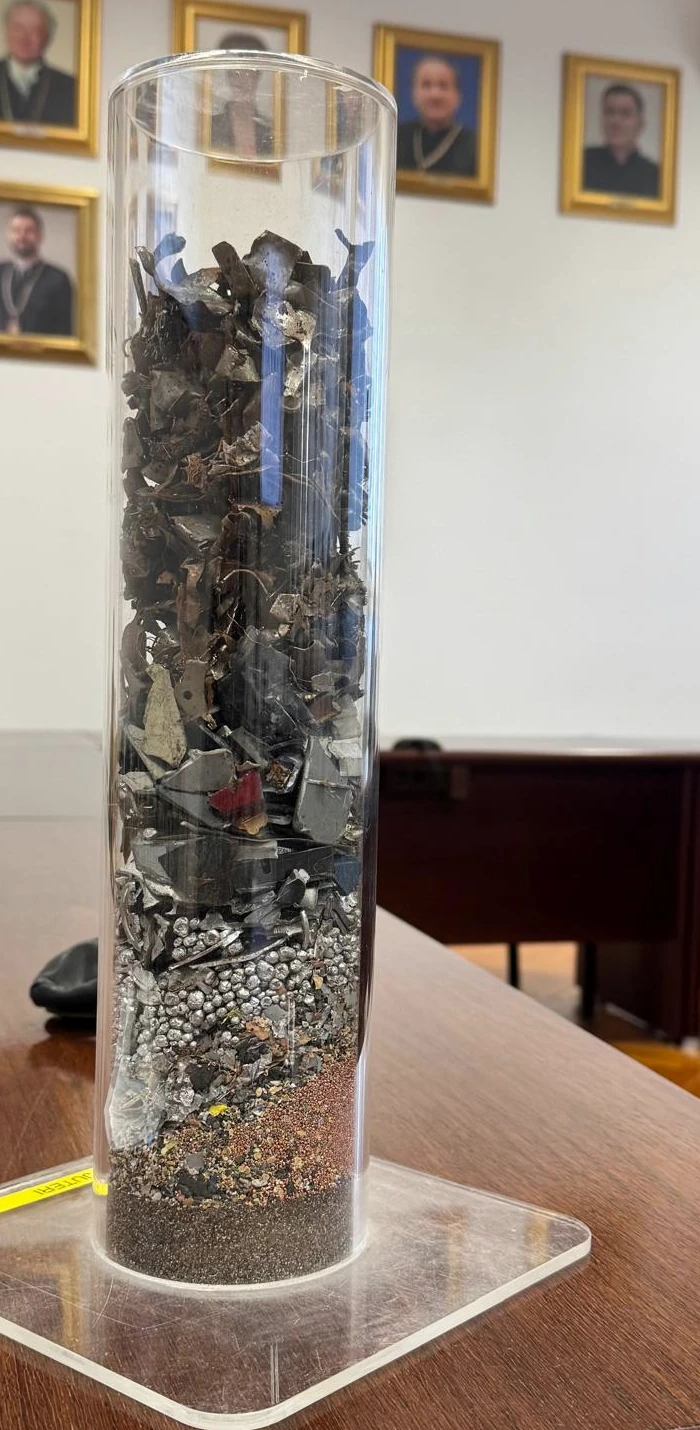
Professor, PhD Aleksandra Anić Vučinić continued by comparing three illustrative situations: the same waste in a hangar, on a meadow and in water. The question was how changing environmental conditions affect possible pathways for substances and the people or organisms that may come into contact with them.
In a hangar, for example, the working methods, ventilation, flooring and possible worker exposure matter. Outdoors, particle dispersal, runoff and seepage through soil need to be considered; in water, the movement of substances, sediment and aquatic organisms matter. An assessment therefore requires specific data on the location and conditions.
The final set of questions connected hazard, transfer pathway and exposure: what was analysed, what properties were established, whether a transfer pathway was confirmed, who is exposed, and how much and for how long. It should also be clearly stated what existing data confirm and what still requires investigation.
Photographs from the workshop
Selected moments and details. Tap a photograph to enlarge it.
Sources and photographs
The report is based on the author's participation in the workshop, photographs of the presentations, the organisers' invitation and the official announcement of the series. The laboratory findings and scenarios described in the text were presented as educational examples.
Faculty of Geotechnical Engineering: “Waste Without Myths” ↗
Photographs: Ekologija.hr archive.