
BIODIVERSITY AND NATURE RESTORATION · BIRD OF THE YEAR
Bird of the Year 2027: three nominated species await your vote
Published
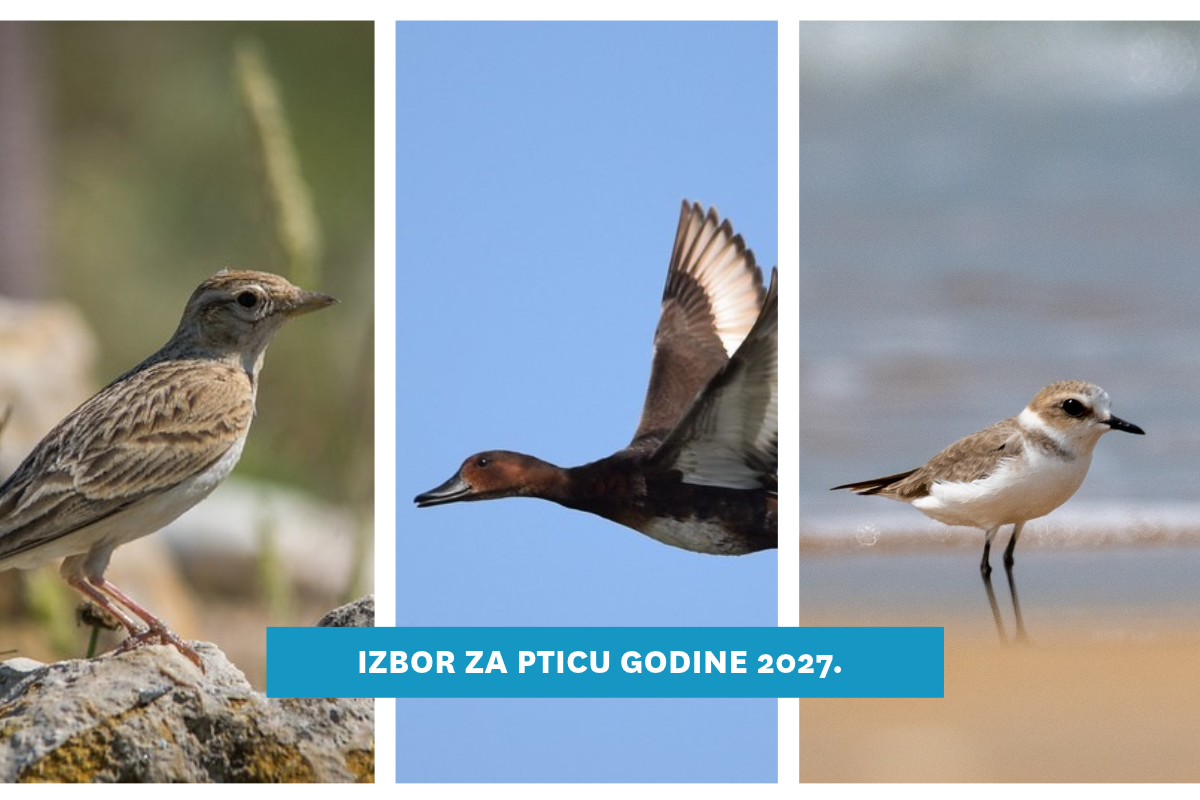
Ferruginous Duck, Greater Short-toed Lark and Kentish Plover are the nominees for Croatia’s Bird of the Year 2027. Meet the candidates and choose your favourite by 22 November 2026 at 23:59 Zagreb time.
Three species and their conservation stories
Croatia’s ornithological community has launched a new Bird of the Year election, initiated by Udruga Biom in Zagreb and the Croatian Society for the Protection of Birds and Nature in Osijek. Ferruginous Duck, Greater Short-toed Lark and Kentish Plover are competing for the 2027 title. All bird and nature lovers can vote.
The election invites people to learn about Croatia’s birds, their ecology and the challenges they face. Each nominee highlights the importance of protecting a different habitat: open grasslands, wetlands and natural shores.
Greater Short-toed Lark depends on open grasslands
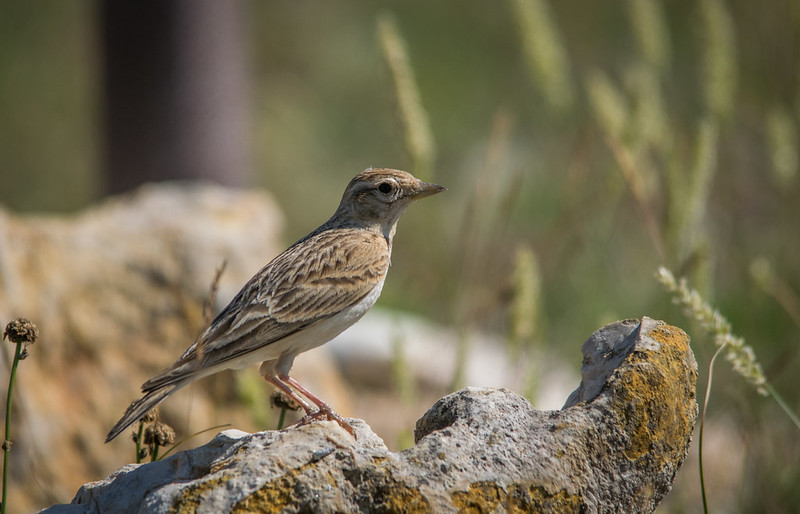
The Greater Short-toed Lark (Calandrella brachydactyla) has brown plumage that conceals it in short, dry grass. Its voice is often easier to detect: its song combines distinctive phrases with imitations of other species. In Croatia it breeds locally in Istria, the northern Adriatic coastal region and Dalmatia, using dry, open grasslands and farmland with low vegetation.
It spends much of its life on the ground, feeding and building a nest often sheltered by a grass tussock. In spring it mainly eats insects and other invertebrates; seeds and green plant material become more important during the rest of the year. It rests at night in shallow hollows it digs itself. Breeding takes place from April to June, with females usually laying three to five eggs. It is partially migratory, and small numbers remain in Croatia during winter.
Croatia’s 2013 Red Data Book of Birds estimated the national breeding population at 200–650 pairs and classified it as Vulnerable (VU). Biom reports a substantial subsequent decline and the disappearance of several local populations. Its press release suggests that the current situation would probably warrant at least Endangered (EN) status. This is Biom’s assessment of the situation, rather than a cited new formal classification. The species is strictly protected in Croatia.
The main threat is the loss of short, dry grasslands. As traditional livestock farming and grazing decline, tall grass, scrub and trees take over. Agricultural intensification also reduces suitable feeding and nesting areas.
Earlier research cited by Biom indicated that about 85% of Croatia’s population bred in seven important bird areas within Natura 2000, including Dinara, Cetina and Krka. Biom also reports a local success: on dry grasslands restored through Dinara back to LIFE, numbers rose from four or five to 25 pairs in four years. Maintaining open landscapes benefits the lark and other grassland species.
Ferruginous Duck, a secretive wetland bird
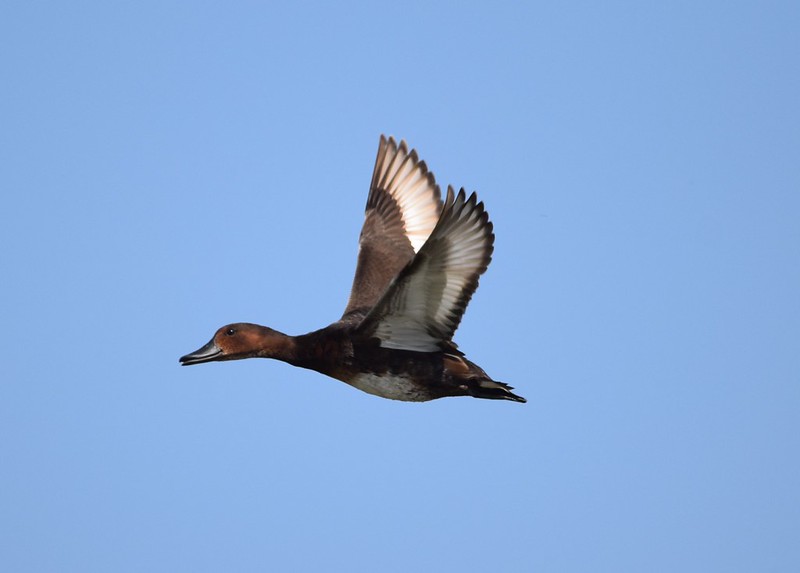
The Ferruginous Duck (Aythya nyroca) is a relatively small diving duck with a chestnut-brown head and body, darker back, and white belly and undertail feathers. Males have a pale, almost white iris, while females have dark eyes.
It is a migratory breeding bird in Croatia, with smaller numbers present in winter. Its fresh breeding plumage then shows striking rusty-red tones. Pairs form as early as late autumn, before reaching their breeding grounds. During breeding, these ducks are secretive, using heavily vegetated fishponds and sometimes hiding beneath water-lily leaves until a threat passes.
According to Biom’s press release, Croatia’s breeding population accounts for approximately 10% of the European population. The species uses shallow freshwater marshes, lakes, pools, carp ponds, and quiet rivers, backwaters and channels bordered by reeds and bulrushes. Aquatic plants and dense wetland vegetation provide essential cover. Outside the breeding season, it also uses larger lakes, lagoons and coastal wetlands.
It dives for food, mainly seeds and other aquatic plant material, supplemented by invertebrates, small fish and amphibians. In spring it nests close to water, concealed in dense vegetation or sometimes on floating plant material. Females usually lay eight to ten eggs and incubate them for approximately 25–28 days. Soon after hatching, ducklings leave the nest to feed with their mother.
It breeds mainly in continental Croatia and is scarce and local along the coast. Larger groups gather on carp ponds during migration. Biom highlights Crna Mlaka fishponds, where several thousand individuals can assemble during autumn migration.
Threats include wetland degradation, poaching and lead shot used in hunting. The species is strictly protected in Croatia; the press release cites its global IUCN category as Near Threatened (NT). Suitable water regimes, intact reed and bulrush beds, and responsible carp-pond management are essential to its survival. Protecting this duck also helps conserve entire wetland ecosystems.
Kentish Plover needs undisturbed natural shores
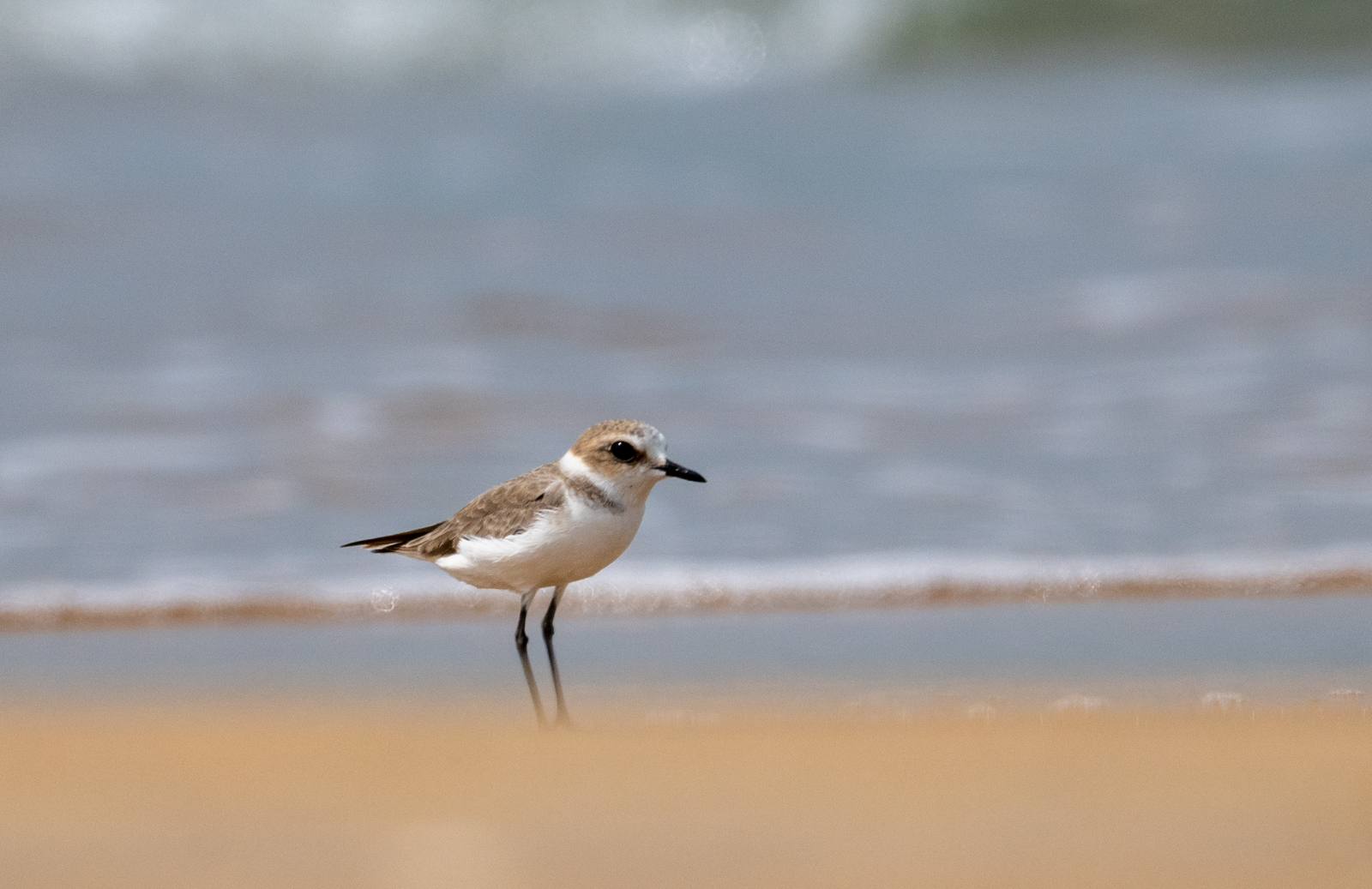
The Kentish Plover (Charadrius alexandrinus) is a small shorebird, measuring 15–17 centimetres. Its grey-brown and white plumage blends with sand and small pebbles. Breeding males have black markings on the head and breast and a reddish-brown crown; females are less strongly marked.
It inhabits sandy and muddy shores, lagoons with salt-tolerant vegetation, and salt pans. On bare ground, among low plants and in shallow water, it searches for insects, small crustaceans and other invertebrates. It needs open feeding areas as well as places to conceal its nest and chicks.
The nest is a shallow scrape in sand, mud or pebbles. Camouflaged eggs are hidden from predators but are also difficult for visitors to see. Trampling, or disturbance that keeps adults away for too long, can destroy a clutch. Chicks leave the nest soon after hatching, follow their parents and find their own food, but are especially vulnerable during their first days.
Suitable breeding sites in Croatia are scarce because the species avoids rocky shores. Biom stresses the importance of low-lying coasts in northern Dalmatia and on Pag, including Nin Lagoon, sandy bays and salt pans. The release reports that breeding at the Neretva estuary is now irregular or absent, with birds finding refuge in nearby Ploče harbour.
Biom cites a 2026 estimate of only around ten to fifteen breeding pairs remaining in Croatia. Losing even a few nests can seriously affect such a small population. Construction, conversion of natural shores into beaches, filling and erosion reduce breeding habitat. Swimmers, walkers, uncontrolled dogs, beach vehicles and mechanical sand cleaning create further disturbance.
An apparently unused beach may be the birds’ only place to raise their young. Conserving natural shores, managing visitor access and protecting nests during the breeding season can help the species survive. Sometimes a small stretch of coast and sufficient peace are what the next generation needs.
Vote by 22 November
Choose one of the three nominees using the voting form. Voting remains open until 22 November 2026 at 23:59 Zagreb time.
Biom invites everyone to take part, learn about the nominated species and share the vote with friends, helping more voices speak up for Croatia’s birds and nature.
Vote for Bird of the Year 2027 →
Croatia’s previous Birds of the Year
Ornithologists and bird and nature conservation organisations started the election to raise awareness of birds and their habitats. The first Bird of the Year was the Sand Martin. The year 2018 was dedicated to terns, particularly Common Tern and Little Tern.
Subsequent choices were Common Quail in 2019, European Roller in 2020, Barn Swallow in 2021, Eurasian Eagle-Owl in 2022, Western Capercaillie in 2023, Rook in 2024, Red-backed Shrike in 2025 and Common Swift in 2026. Since 2021, the wider public has helped decide the winner through its votes.
Source and photographs
Udruga Biom · Bird of the Year 2027 election · 12 November 2026
Biom Association · Bird of the Year 2026 (Apus apus)
Based on a press release by Udruga Biom, with language editing and web adaptation by the editorial team.
Photographs supplied by Udruga Biom for publication alongside the press release. Greater Short-toed Lark and Ferruginous Duck: Udruga Biom. Kentish Plover: Sunny Joseph / iNaturalist, CC BY. Individual photographs are shown without content alterations. The cover composition shows crops of these photographs.