
Space and sustainable development · the voice of science
University of Zadar: development must preserve space as a common good
Ekologija.hr welcomes the University of Zadar's decision to explicitly highlight space as a shared value and responsibility. This contribution from academia deserves praise because it places knowledge, the public interest and responsibility towards future generations at the heart of the discussion on development.
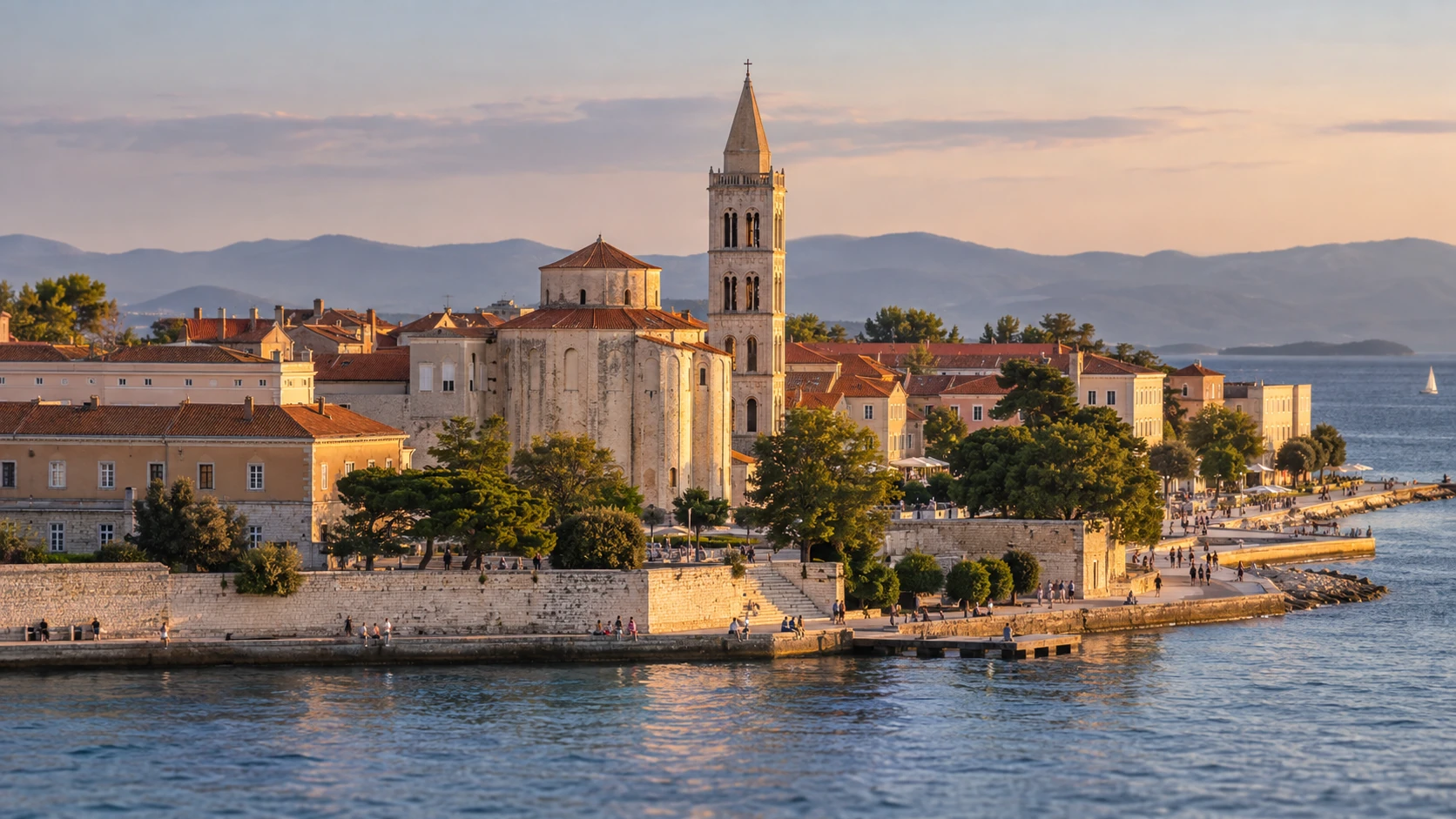
On 29 September 2026, the Senate of the University of Zadar adopted Statement on Space as a Shared Value and Responsibility. The document addresses academia and the wider public, and its central demand is that spatial decisions be responsible, prudent and sustainable over the long term. The University does not pit spatial protection against development: it calls for development needs to be aligned with the public interest and the preservation of values that cannot always be restored.
“Space is more than a development resource. Space is a shared value, a living environment and part of our identity.”
Space as a whole
The coast, islands, sea, settlements, forests, farmland, roads and cultural assets are not separate parts that can be managed without considering their interconnections. The statement advocates a holistic understanding of space: natural and cultural components form an interconnected whole, shaped by the long-standing relationship between people and their environment.
This perspective also leads to a different understanding of development. It is not enough to consider only the economic value of land or the benefit of an individual intervention. We must consider what a change means for the landscape, quality of life, resources and the opportunities of future generations. Short-term gain, the Senate says, should not come at the cost of the long-term degradation of space.
The legitimate interests of individuals, businesses, institutions and public bodies should therefore be considered within a broader social, economic, cultural and ecological context. Individual interests must not override shared and public interests.
Prudent planning and responsibility for the consequences
The statement applies the same principles to various types of major development: public and transport infrastructure, energy and tourism projects, housing construction and other public and private interventions. Each should be carefully considered, grounded in expertise, transparently planned and responsibly implemented.
Technical feasibility and economic justification are not sufficient to assess acceptability. It is necessary to consider direct and indirect, individual and cumulative, and short-term and long-term effects. This includes nature and the environment, the landscape, cultural heritage, the population, the local economy, public infrastructure and overall quality of life.
The Senate particularly emphasises independent, competent expert oversight based on verifiable data, scientific knowledge and clearly defined criteria. The competent public authorities should appoint experts from different fields transparently, protecting their independence and avoiding conflicts of interest.
Equally important is timely, substantive and reasoned public participation. Citizens are not merely users of space: local communities possess experiential knowledge that can contribute to planning and decision-making.
Special responsibility towards sensitive areas
In the Croatian context, the statement particularly highlights karst, islands, the coastal zone and the sea. Their limited resources, sensitive ecosystems and natural, landscape and cultural value require careful management. The sea is not merely a tourism or economic resource, but also a complex ecosystem, a food source, a space that connects people and part of the cultural landscape.
Urban areas and the coastal zone also deserve particular attention, as they concentrate people, infrastructure, capital and various functions. These are precisely the places where pressures from housing, tourism and transport strongly intersect with public and private interests.
The statement therefore warns that spatial planning must remain an instrument for protecting the public interest, not a process of subsequently adapting space to individual projects that have already been designed.
The academic community's responsibility
According to the statement, the University's role is not merely to create and transmit knowledge. Academia is called upon to participate actively in research, planning and monitoring changes in space and the environment, and to critically examine the processes that determine quality of life.

Scientists and experts must protect their independence regardless of the source of funding for the research or project. This includes objectively establishing the situation, considering possible consequences, highlighting risks and uncertainties, and continuously monitoring the environment. Knowledge should serve the public good even when its findings do not align with short-term economic, political, institutional or other interests.
The University announces support for interdisciplinary and transdisciplinary research. The complexity of spatial and environmental challenges requires cooperation among different sciences and the arts, as well as dialogue with public administration, business, civil society and local communities.
Education for responsibility
A responsible approach to space cannot be built through laws, plans and oversight alone. Its essential prerequisite, the document stresses, is an educated, aware and responsible person.
The call to action therefore applies to every level of education, from early childhood to universities and lifelong learning. Alongside formal curricula, the statement identifies fieldwork, extracurricular activities, public lectures and citizen initiatives as ways to develop knowledge and responsibility.
Environmental awareness is also an ethical issue: our relationship with other people, other living beings, shared resources and future generations. Responsibility towards the places we share therefore remains inseparable from responsibility towards people.
The space we inherited and the space we leave behind
The final appeal is addressed to public authorities, scientific and educational institutions, businesses, civil society, the media and citizens. Development, construction, housing, production and infrastructure are necessary for society, but no intervention should be considered in isolation from the space it becomes part of and the community it affects.
Space is not unlimited, not all of its components are renewable, and it does not belong to just one generation. What we build, remove or repurpose today becomes part of future generations' inheritance.
The University's closing message connects conservation and development rather than opposing them:
“Preserving space does not mean giving up development. It means developing in a way that does not impoverish the space we have inherited, but passes it on to future generations as preserved and enriched as possible.”
University of Zadar statement
The article is an editorial treatment of the supplied Senate statement of 29 September 2026. The praise in the introduction reflects the position of the Ekologija.hr editorial team and is not part of the original statement. The statement is signed by Rector Professor Josip Faričić, PhD. No subsequent statements, information on individual projects or interpretations of legislation have been added.
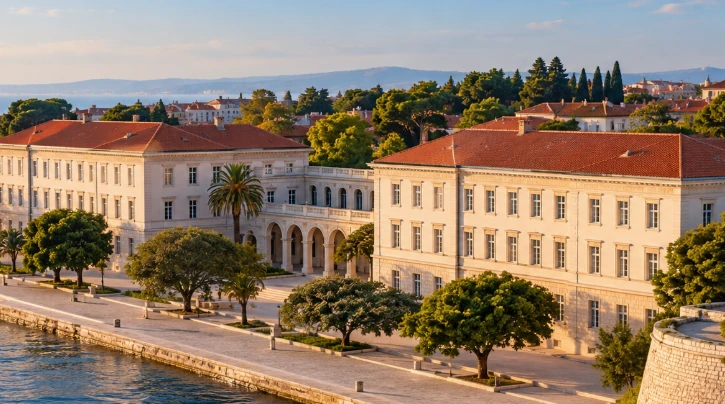
The Zadar-inspired panorama and view of a waterfront university complex are AI illustrations, not documentary photographs. The photograph featuring the University's emblem is supplied material; its photographer and licence are not stated.