NEWS AND CONTEXT
WWF Adria invites small-scale coastal fishers to free workshops on financial security
Published 1 November 2026 · Original news: 22 October 2026
WWF Adria has announced two free online workshops for small-scale coastal fishers, on 3 and 17 November 2026 at 6 pm. Alongside practical topics on personal finance, the announcement raises a broader question: how can marine conservation be linked to greater security for people whose lives and work depend on it?
Two sessions for questions from everyday life
According to WWF Adria announcement of 22 October, the programme covers personal finances, retirement savings, investing, credit and insurance. The topics were chosen in response to needs identified by fishers themselves. The sessions will be led by financial experts, and participants will be able to ask questions. The organiser thus links financial education with the long-term sustainability of small-scale coastal fisheries and coastal communities.
The first session is on Tuesday, 3 November, and the second on Tuesday, 17 November; both start at 6 pm. Access links have been published in the official announcement. The online format makes it possible to take part without travelling, making this training more accessible to fishers from different coastal towns. There is no charge to participate.
More secure households are part of sustainable fisheries
The reason for linking ecology and financial security can also be seen in the FAO’s global review of social development in small-scale fisheries. Incomes in this sector can be unstable, partly because of seasonal changes in catches. FAO warns that barriers to accessing social protection also exist in some parts of the world. This international review shows why support needs to be tailored to local circumstances, rights and services available to each fishing community.
FAO lists education, access to social security, credit and insurance, and health protection and safety at sea among the key areas for support. Training such as the announced workshop can help people better understand the issues fishing households need to consider. On its own, however, it does not resolve the market and social conditions in which they operate. Long-term sustainability should therefore be considered in terms of individuals’ knowledge, the availability of services and how resources are managed collectively.
From catch to local table
In the new announcement of 29 October FAO stresses that progress in small-scale fisheries also involves how fish are stored, processed and sold. Better-organised systems for preserving quality can reduce losses and give producers more time to sell their catch. According to the announcement, the success of such changes should be assessed in terms of income, working conditions and the availability of food to local people, rather than solely by the technology introduced.
For coastal communities, this offers a useful framework for considering the value of the entire chain, from fisher to buyer. Development also involves the question of how much value is retained after going out to sea, and who benefits from it. FAO also links access to finance with education, infrastructure and the involvement of fishing communities in designing solutions. These examples provide a broader international context for discussing community resilience and their role in the sustainable use of the sea.
Fishers themselves should be part of the conversation
FAO Voluntary Guidelines for Securing Sustainable Small-Scale Fisheries start from the needs of people and their communities. As well as managing fish stocks, they cover working conditions, participation in decision-making, equality and local sources of income. This approach is a reminder that decisions affecting fisheries should also be informed by the experience of those who work at sea every day, as well as those involved in processing and selling fish.
The opportunity to ask questions announced for the workshops is therefore a valuable feature. As an editorial suggestion for preparing, we have picked out a few questions drawn from everyday experience: which financial information is difficult to understand, what matters when comparing offers, and which long-term costs would be useful to know more about. Participants’ own questions can help make the discussion more practical and relevant to their real needs. Check the links and latest participation information in WWF’s official announcement before the chosen session.
Verified sources and further reading
Original editorial content based on the primary sources listed. Links lead to the original publication or documentation.
- WWF Adria — Free online workshops for small-scale coastal fishers
2026-10-22 - FAO — Social development and decent work
Accessed 1.11.2026. - FAO — Innovation that feeds people: the right to food and small-scale fisheries
2026-10-29 - FAO — Guidelines for sustainable small-scale fisheries
Accessed 1.11.2026.
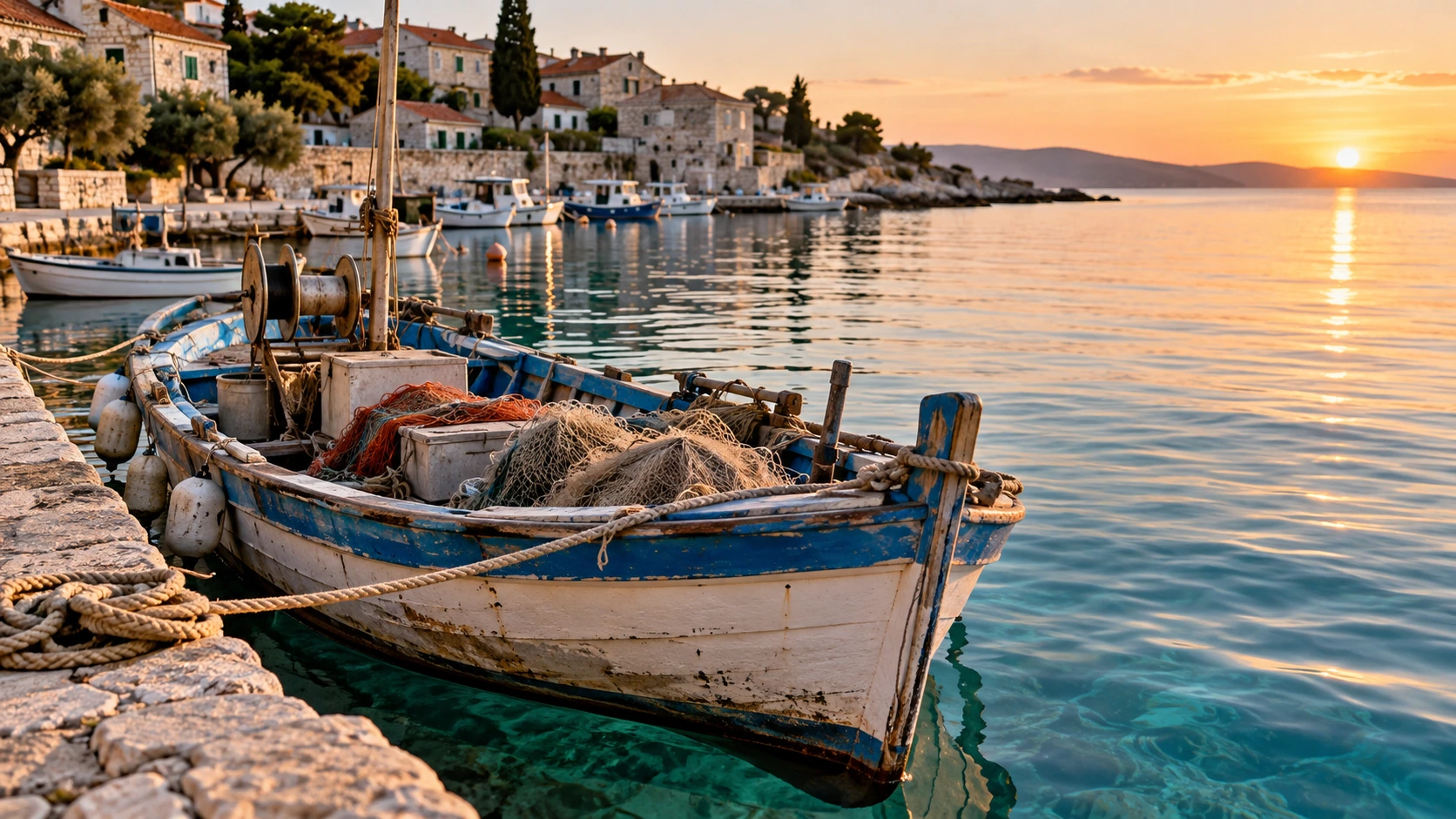
The cover illustration was created with the help of artificial intelligence.