
NEWS AND CONTEXT
Nature restoration is progressing: why rivers, wetlands and the coast need greater momentum
Published 1 November 2026 · Original news: 30 October 2026
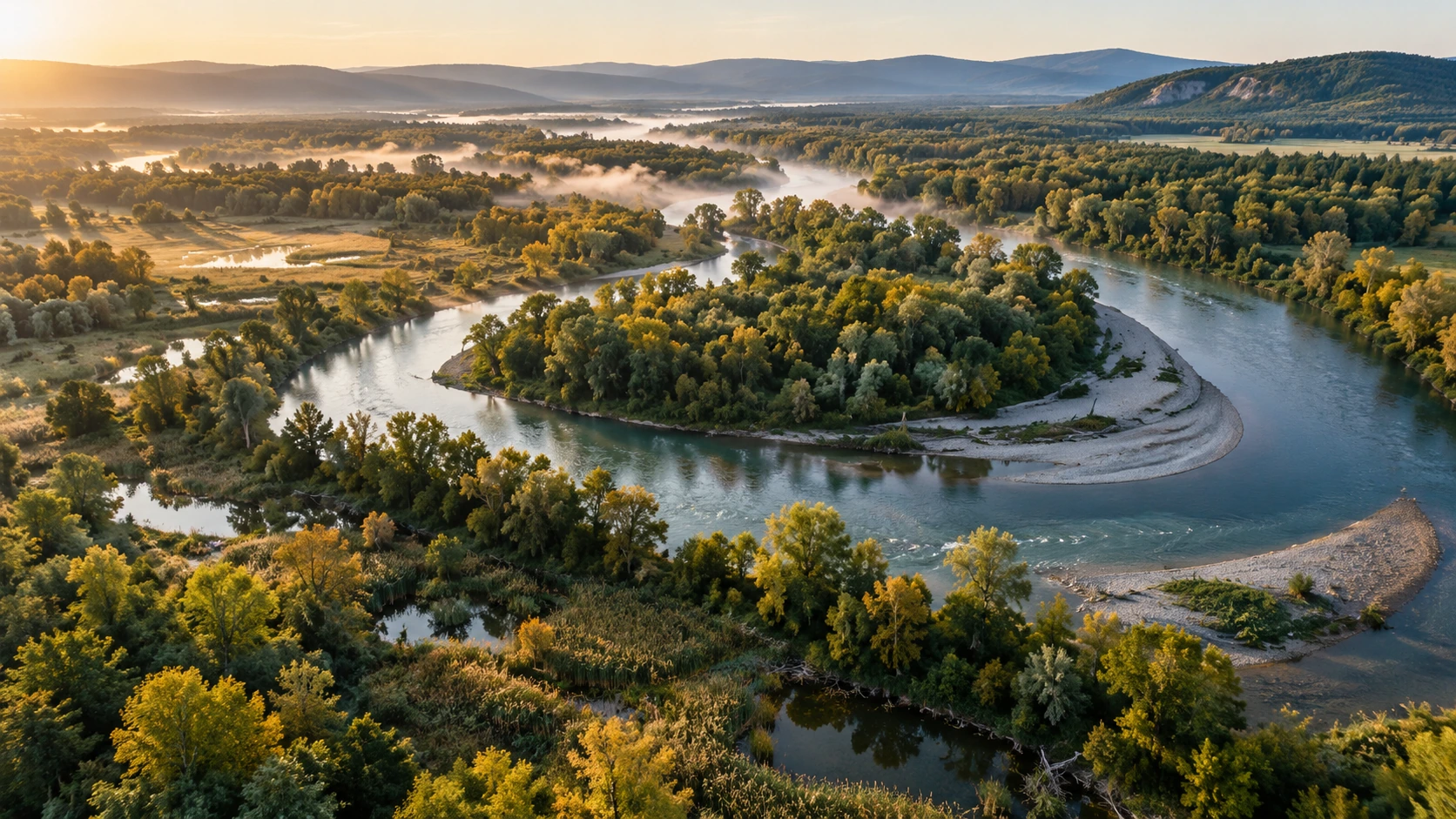
Nature can recover, and restoration activities already cover approximately 252 million hectares in 149 countries. A new UN report shows the scale of this effort, but also its uneven progress. For Croatian readers, the key question is how to turn the restoration of rivers, wetlands and the coast into lasting improvements in the state of nature.
Hectares under restoration are not yet fully recovered nature
Report Nature’s comeback, jointly published by FAO, UNEP and the Secretariat of the Convention on Biological Diversity, was presented on 29 October 2026 at COP17 in Yerevan. According to UNEP press release, this is the most comprehensive global assessment of restoration progress to date. The document links work carried out so far with the international goal of bringing at least 30 per cent of degraded ecosystems under effective restoration by 2030.
However, the number of hectares indicates the area where restoration is taking place; it does not confirm that the area has already fully recovered. FAO warns that the return of biodiversity and ecological functions can take decades. Results should therefore also be assessed in terms of the condition of habitats, the connectivity of areas and the benefits restored ecosystems provide to people. The scale of an intervention alone is not enough to judge its success.
Aquatic habitats are lagging behind, and the data is incomplete
Global progress is more evident on land than in water. Documented restoration covers 11 million hectares of freshwater ecosystems and 5.7 million hectares of marine and coastal ecosystems. UNEP highlights that these are precisely the areas exposed to particularly rapid decline. It also warns that limited reporting may understate the actual activity. A weaker documented result should therefore be read alongside the limitations of the available data.
The global picture is not complete either: according to FAO, 46 countries have not provided numerical data on progress through any of the reporting systems considered. Different definitions and monitoring methods make comparisons even more difficult. This points to an important task for every project: document the baseline, monitor changes using the same method and explain what has actually improved. FAO overview stresses that area must be supplemented by indicators of ecosystem health.
Restoration needs investment that lasts longer than the project
WWF Adria reported the findings on 30 October, stressing that the current pace is insufficient. In WWF’s presentation of the report estimated annual investment needs rise to US$296 billion by 2030, compared with a recorded level of US$64 billion. Areas with substantial financing needs include agroforestry, forest and peatland restoration, and seagrass meadows.
That message is not limited to finding money for initial works. WWF stresses the importance of long-term political support, local community participation and clear land rights. Restoration must continue beyond 2030 to sustain its effects. It is equally important to tackle the causes of nature’s decline: a new project cannot permanently compensate for damage that continues to be done in the same area at the same time.
What this means for Croatia and local projects
Croatia’s framework for bringing these issues together is the National Nature Restoration Plan. Ministry of Environmental Protection and Green Transition its description of how it was developed sets out measures through to 2030, areas and indicative maps, as well as a strategic overview for 2040 and 2050. Relevant stakeholders are to be involved, and implementation monitored. This is a planning framework; the list of future measures alone does not constitute evidence that individual habitats have already been restored.
The European Commission points out that national plans should link nature protection with water management, agriculture, forestry, fisheries and climate policy. Such coordination should help ensure that measures are tailored to local conditions. Healthier ecosystems can help conserve water, improve soil health, cool cities and reduce risks to communities. Croatia’s discussion of restoration should therefore include those who use the land, not just specialist agencies.
For the public, this raises very practical questions: what is the baseline condition of the selected area, what is to be improved, who will monitor the effects and how will care continue once funding ends? This is the editorial starting point for monitoring domestic projects. We will best understand the value of restoration when, alongside announcements of interventions, we can also follow their verifiable results over time.
Verified sources and further reading
Original editorial content based on the primary sources listed. Links lead to the original publication or documentation.
- WWF Adria — Nature is recovering, but the world must act faster to meet restoration targets
2026-10-30 - UNEP — Nature is making a comeback, but the world must move faster to meet restoration targets
2026-10-29 - FAO — Nature’s comeback in numbers: How far has global restoration come?
2026-10-28 - MZOZT — National Nature Restoration Plan
Accessed 1.11.2026. - European Commission — EU countries submit draft plans on restoring nature
2026-09-01
The cover illustration was created with the help of artificial intelligence.